
Draw lessons from the Doklam standoff, China tells India
The dispute was resolved ahead of the BRICS summit
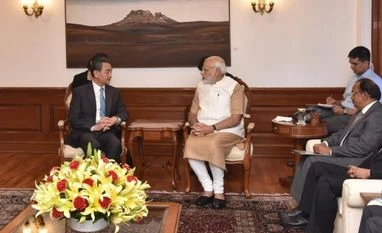 "Draw lessons from the Doklam standoff, China tells India")
WebinarsNew
Deep DiveNew
Explore Business Standard
The dispute was resolved ahead of the BRICS summit
China on Wednesday told India to prevent a repeat of the Doklam standoff in future, with its Foreign Minister Wang Yi advising New Delhi to draw lessons from the border incident.
However, Wang also said it was natural for two big nations to have differences, but they needed to set them aside and work out a solution in the long run.
Wang's remarks come two days after Indian and Chinese troops retreated from the face-off point in the disputed Doklam plateau, ending an over two-month long standoff.
"We hope the Indian side will learn lessons from this incident and prevent similar incidents from happening again," Wang said at a press conference on the preparations for the BRICS summit next week, which will be attended by Indian Prime Minister Narendra Modi.
"We hope through the efforts from both sides we will maintain healthy and stable momentum of growth. This is in the interest of not only Indian and Chinese people, but also meets the aspirations of the international community," Wang said.
The standoff was triggered when the Indian Army stopped Chinese troops from building a road at Doka La in Doklam on June 16. Doklam is claimed by Bhutan and close to India's arterial corridor, which connects its northeast region with the rest of the country.
The dispute was resolved ahead of the BRICS summit where Modi and Chinese President Xi Jinping are likely to meet on the sidelines.
"Both India and China are big countries. It's only natural that there are some problems in our interactions. What is important is that we put these differences at an appropriate place," Wang said.
"And under the principles of mutual respect and following the consensus of the leaders, we need to handle and manage them properly.
"In the meantime, with our engagement through a different mechanism, we need to work out a solution in the long run.
"There is huge potential and space for greater cooperation between China and India. And such cooperation serves the interests of the two countries and people's
"We hope China and India will join hands and work together for the rejuvenation of, for development of our region and contribute our share to the greater development."
First Published: Aug 30 2017 | 11:04 AM IST


 Connect with us on WhatsApp