Explainer: How lithium reserves can help speed up India's EV dream
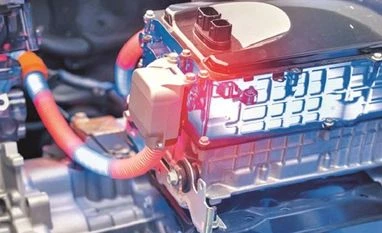
As India gears up to boost electric vehicle adoption, the massive find of lithium reserves in the country has brightened up the prospects for the country in the field of EV battery cell manufacturing
IANS New Delhi As India gears up to boost electric vehicle (EV) adoption, the massive find of lithium reserves in the country has brightened up the prospects for the country in the field of EV battery cell manufacturing.
According to the Council on Energy, Environment and Water (CEEW), the country will require Rs 33,750 crore of investment to meet its domestic lithium-ion battery manufacturing target of setting up 50 GWh of lithium-ion cell and battery manufacturing plants.
India's lithium cell production is projected to be 70-100 GWh by 2030.
"The 5.9 million tonnes of lithium reserves found in J&K, if completely extracted and converted into battery-grade Lithium can support up to 6 TWh of cell production, which would give India a much-awaited push to achieve its net zero goals," Dr Akshay Singhal, Founder and CEO at Log9 Materials, told IANS.
Lithium is a light and reactive metal mostly found in concentration with other materials in the form of oxides and carbonates. Converting the raw lithium to battery-grade lithium calls for a series of refining processes some of which are not present in India for which we may have to depend on other countries.
To solve this bottleneck, advancements in the field of material sciences are imperative to ensure the entire supply chain remains within the country.
Despite some initial hiccups, the EV penetration in India is slowly but steadily increasing, especially in the e-scooter segment.
Now, the four-wheeler manufacturers have also joined the bandwagon, pushing India's aim to significantly cut the dependency on traditional fuels and internal combustion engine-driven vehicles by 2030.
By 2030, the government expects the EV sales penetration to be 30 per cent for private automobiles, 70 per cent for commercial vehicles, and 80 per cent for two and three-wheelers, which would not only reduce the country's oil import bills in the longer term, but also ensure a cleaner environment.
The sales of electric vehicles (EVs) in the country witnessed a surge in the last two years. While 48,179 EVs were sold in 2020-21, the figures increased to 2,37,811 in 2021-22 and 4,42,901 in 2022-23 (till December 9, 2022).
According to Soumen Mandal, senior research analyst, IoT, automotive and devices ecosystem at Counterpoint Research, in terms of EV adoption at the moment, the three-wheeler segment is leading the market with a 4 per cent share, followed by two-wheelers (3.5 per cent) and passenger vehicles (1.3 per cent).
By 2025, the market share of electric passenger vehicles in India is expected to increase to more than 6 per cent.
For a market that already has over 13 lakh EVs including 2Ws, 3Ws, and 4Ws, and continues to grow, the coming years hold tremendous promise and the massive lithium reserve discovered in Jammu and Kashmir is only going to speed up the EV journey.
"The lithium reserves' impact is far bigger as it will transform India from being just a big EV consumer market to giving us an end-to-end supplier position at the global level," Singhal said.
--IANS
na/arm
(Only the headline and picture of this report may have been reworked by the Business Standard staff; the rest of the content is auto-generated from a syndicated feed.)

 "Explainer: How lithium reserves can help speed up India's EV dream")


 Connect with us on WhatsApp