
Former chief of Army staff says Indo-Myanmar gas pipleline unviable
General Shankar Roy Chowdhury suggested sea route as it won't involve crossing territorial waters of other countries
 "Former chief of Army staff says Indo-Myanmar gas pipleline unviable")
Explore Business Standard
General Shankar Roy Chowdhury suggested sea route as it won't involve crossing territorial waters of other countries
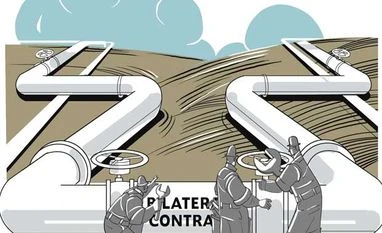
Instead, the former senior army personnel suggested sea route from Sitway in Myanmar to Indian major ports as more viable, as a sea route will not involve crossing territorial waters of other countries apart from Myanmar and India.
"The gas pipeline is not viable and India should opt for the sea route", the former general, who is also the patron and founding member of Kolkata based think-tank CENERS-K, said.
The project was first conceived in 2005, meant to deliver 5 billion cubic meters of gas from the Swe field in Southern Myanmar to India but was later shelved after India refused to accept three additional conditions from Bangladesh. The country again resumed talks with India over the project in 2010 with India.
However, by that time, Myanmar had already signed an initial agreement with China for a 2,388 km pipeline from Kyakphu in Myanmar to China's Yunnan province.
First Published: Sep 30 2016 | 5:30 PM IST


