
Govt may introduce bill on cryptocurrencies in Parliament winter session
The three-week long winter session is scheduled to be held from November 29 to December 23
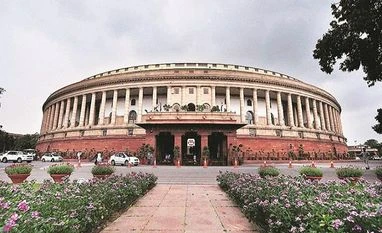 "Govt may introduce bill on cryptocurrencies in Parliament winter session")
WebinarsNew
Deep DiveNew
Explore Business Standard
The three-week long winter session is scheduled to be held from November 29 to December 23
The government is likely to introduce a bill on crypto currencies during the winter session of Parliament beginning November 29, amid concerns over such currencies being allegedly used for luring investors with misleading claims and for funding terror activities, sources said on Monday.
Currently, there are no particular regulations or any ban on use of crypto currencies in the country. Against this backdrop, Prime Minister Narendra Modi, on Saturday, held a meeting on the crypto currencies with senior officials and indications are that strong regulatory steps could be taken to deal with the issue.
The sources said the proposed bill would focus on investor protection as crypto currencies come under a complex asset class category.
Once cleared by the Union Cabinet, the government plans to introduce the bill on crypto currencies in the first week of the winter session.
In August, Finance Minister Nirmala Sitharaman said she was awaiting an approval from the Cabinet on the crypto currency bill.
Both the government and the Reserve Bank of India (RBI) have raised concerns about crypto currencies in recent months.
The three-week long winter session is scheduled to be held from November 29 to December 23.
On Monday, the Parliamentary Standing Committee on Finance discussed the pros and cons of crypto finance with various stakeholders, and several members were in favour of regulating crypto currency exchanges rather than an outright ban on the such currencies, according to sources.
At the meeting convened by the prime minister on Saturday, it was strongly felt that attempts to mislead the youth through over-promising and non-transparent advertising of crypto currencies should be stopped, sources had said.
An inter-ministerial panel on crypto currency under the Chairmanship of Secretary (Economic Affairs) had recommended that all currencies except those issued by the state should be banned.
Earlier, RBI had said that unregulated growth of crypto currencies poses threat to the macroeconomic and financial stability of the country.
Last week, RBI Governor Shaktikanta Das reiterated his views against allowing crypto currencies saying they are a serious threat to any financial system since they are unregulated by central banks.
The central bank has also plans to introduce an official digital currency.
On March 4, 2020, Supreme Court set aside an RBI circular of April 6, 2018, prohibiting banks and entities regulated by it from providing services in relation to virtual currencies.
(Only the headline and picture of this report may have been reworked by the Business Standard staff; the rest of the content is auto-generated from a syndicated feed.)
First Published: Nov 15 2021 | 9:34 PM IST


 Connect with us on WhatsApp