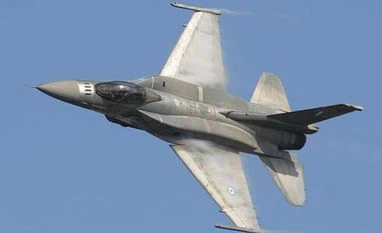
India is not likely to come to a resolution in 'transfer of technology' in production of F16 and other fighter jets "for at least a year and a half", a top Pentagon official has said.
"Obviously technology transfer is something that India is really really hoping for -- looking for so how much we're able to work through -- will probably be a key determinant," US Air Force Secretary Deborah Lee James told reporters yesterday.
"Then a key determinant in what India ultimately ends up doing will relate to the make in India part, how many jobs, what sorts of technologies might transfer," James said.
"The Indian government is not likely to come to a resolution on this for at least a year, a year and a half perhaps, that's my impression," she said.
James, who recently returned from India said, India is thinking about manufacturing not just F-16s and F-18s.
"They're also considering the Grippons and a variety of other aircraft. But I always consider it my -- part of my job when I travel overseas is I am team USA and I am going to talk about our fantastic programs and the importance of training and interoperability. These are the types of things that I stress plus the total package approach," she said in response to a question.
James said her discussions with respect to the F-16 and F-18 did not get into the actual details of what industry proposed.
"My discussions related to the importance of interoperability, joint training, how we have and of course, many countries around the world have extensive experience with both the F-16, the F-18," she said.
"Now there is always technology transfer issues to work through but obviously, just about the F-16, that has been produced and has been sold to many different countries around the world so it's a question of working through these technology transfer issues," James said.
The US Air Force Secretary said, in India she discussed with Indian officials its modernisation programs, their desired modernisation program as well as their strong interest in co-production and co-development technology transfer.
"Some of this would occur under the defence technology and trade initiative. That, of course, would be viewed as complementary, to Prime Minister (Narendra) Modi's make in India campaign, so they are interested in growing jobs in India," she said.
"I did have the opportunity to talk about both the F-16 and the F-18 proposals which came direct from industry, they are not US government proposals, they are not FMS (Foreign Military Sales)," she said.
"I had the opportunity to talk to the leaders with whom we met in India about just how high quality both of these aircrafts are how the selection of either one of them would go a long way for interoperability, being able to train with partners and allies and also the importance of the total package approach, that is to say, buy the aircraft, but an aircraft alone won't do you," she said.

 "Govt not likely to come to resolution in production of F16")

