Prime Minister Narendra Modi on Monday tried to sell the goods and services tax (GST) as one that would help small businesses, spare the poor, generate additional jobs and help in regional development. Parliament cleared the Constitution (122nd Amendment) Bill, shifting the focus to states.
The government had moved six amendments, including scrapping of 1 per cent additional tax, to the Bill approved by Rajya Sabha.
Modi said the GST is a “crucial step” towards ending tax terrorism besides reducing corruption and black money.
Ahead of elections in five states to be held early next year, Modi, speaking in Lok Sabha, said the new indirect taxation will make consumer the king, and will benefit mainly those states that are considered backward and address the problem of imbalanced development. The new tax regime would also get rid of corruption as businesses would produce real bills as they would get input credit, he said.
The Opposition called for the inclusion of measures such as anti-profiteering in subsequent Bills, but Finance Minister Arun Jaitley said a decision on this could only be taken by the proposed GST Council.
There was also no unanimity between the treasury benches and the Congress about the cap of 18 per cent in the GST Bills. In fact, the Congress admitted that there are differences between the national leadership of the party and states ruled by it.
Jaitley said the tax rate will be kept at the “minimum workable rate” as no state government can annoy its people by having a higher rate. He also clarified that a changed provision in the Bill that say unclaimed amount in the integrated GST will not be distributed among states was incorrectly worded in the official amendments and was corrected later. The clarification may soothe frayed nerves of states such as Kerala and West Bengal, which were agitated over this. The Opposition also could not get an assurance from the finance minister that the subsequent GST Bills would be finance Bills and not money Bills. He said he would go by provision of the Constitution as given in article 110 and 117.
The Lok Sabha had cleared the Constitution amendment Bill in May, 2015. The Rajya Sabha last week passed the amended version of that Bill and the lower house on Monday cleared those changes. Key changes also included full compensation to states for the five years of the GST roll-out.
All 443 members who were present, voted for the amendments with only the All India Anna Dravida Munnetra Kazhagam staging a walk out. The Bill now goes for Presidential reference after which it would go to states, at least half of which have to ratify. It will then go back to the President, who has to give his assent to make it a law.
The prime minister said the new tax system would also improve logistics and by subsuming Octroi into it, would get rid of long queues of trucks that are seen at states’ borders. Though manufacturing states will be hit, they will be compensated for any revenue loss for full five years, he said.
Modi said items consumed by the poor would be exempt from GST. Fifty-five per cent of the consumer price index would be out of GST, he added.
Modi later tweeted, “our focus is economic and educational empowerment of the poor and mitigation of poverty”. The Prime Minister said the GST will help reduce black money. “GST will ensure optimal utilisation of man, machine, material, money and minute (time), which are key [for accelerating] economic growth.”
Modi expressed happiness at the unprecedented consensus of parties that helped pass the Bill, noting that there had been a thorough “churning of ideas”. He exhorted states that they should ratify the Bill soon, as it would open door for GST Bills. This Bill is just an enabling provision, after which the GST Council will be set up. The council will prepare the subsequent Bills. The Centre hopes these Bills will be passed in the winter sessions of Parliament and respective state legislatures.
Jaitley countered the demand from the Congress that the GST rates be capped at 18 per cent, asking them to get feedback from the states ruled by the party. Jaitley said Kerala wanted 22 per cent GST rate and National Institute of Public Finance and Policy recommended 24 per cent. There has to be convergence of views, he said. The decision on this will be taken by the GST Council. The finance minister also contested the Congress’ opinion that being an indirect tax, GST should be lowered. He said it sounds good in academics but 160 million of the 250 million households in the country have been exempted from income tax.
He also opposed the idea that the Centre should have one-fourth votes in the GST Council and states three-fourth. That way, quorum for the council would be had without the Centre, which is not in sync with the idea enshrined in the Constitution that India is a union of states.

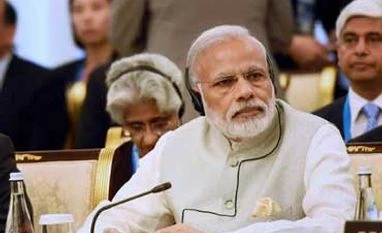 "GST to spare Poor, make consumer king: PM")


 Connect with us on WhatsApp