How Pankaj Tripathi has become the face of three national brands

Tripathi believes that his stint as brand endorser is more challenging than that as an actor
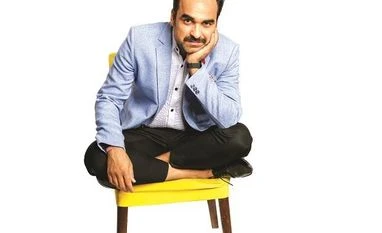
Pankaj Tripathi
Pankaj Tripathi
Urvi Malvania Mumbai
4 min read Last Updated : Jun 19 2019 | 10:45 PM IST
Pankaj Tripathi is no newcomer to brands and advertisers. He has spent years essaying the roles assigned to him by ad film makers, while running his soles thin in pursuit of a break on the big screen. Over the past year, however, following his success at the movies and OTT shows (Gangs of Wasseypur, Sacred Games and Mirzapur among others), his stock as a brand endorser has hit a high. Apart from Tata Tea (an endorsement that started out as an acting role), he is also the face for Star Plus and Policybazaar, helming their national campaigns.

“I think it was in 2007 I did my first ad for Tata Tea’s Jaago Re campaign. It was a huge hit back then. At that time I didn't even know contracts were made for ads for a year. I have shot without having contracts in place, some ads are still playing, since there is no contract,” he explains.

How did an admittedly naïve Tripathi cut himself a niche as an endorser? Especially since he is not among the top three Bollywood actors, nor does he command a big following on social media platforms.

Breaking convention

Unlike Irfan Khan and Nawazzudin Siddiqui, Tripathi who plays in the same indie space, is yet to notch up a big hit or an international role. But brands are not complaining. 

Tripathi has managed to leverage his offbeat status smartly, says a talent manager who does not want to be named. “He does not have a peer in Bollywood right now and he could charge between Rs 25 lakh a day to Rs 1 crore a day, more in the league of television actors,” he adds.

Tripathi believes that his stint as brand endorser is more challenging than that as an actor. “Here an actor has to entertain while also promoting and talking about the product to the audience, which makes it more challenging,” he says. He auditioned for a role with ad film makers back when he was fresh out of National School of Drama (he graduated in 2004). At the time there was no difference between playing a role in an advertisement for a brand and being a brand endorser. But the industry has changed and so have his fortunes.  

Harish Bijoor, founder-CEO Bijoor Consults says, “He is a known face, but he isn't the conventional lead actor in Bollywood. Actors like him can carve a niche for themselves in the endorsement business since they have a rustic appeal.” He points out that are two ways to reach a mass audience. Either hire someone like an Amitabh Bachchan who is widely known, or go for someone with a rustic appeal. Tripathi ticks the second box.

Acting the part

In all the campaigns that he has undertaken in recent months, Tripathi has donned the greasepaint as another character, not himself. Bijoor explains that with actors such as Tripathi, brands would rather have campaigns where they play characters. “There are two reasons. Tripathi is known for bringing a uniqueness to every character he plays, and hence, brands would want to utilise that asset. Secondly, while he is a known face, he may not be as popular as a Shah Rukh Khan to resonate across the country,” he adds.

Tripathi says, “I do take keen interest on the aspect of creative inputs for ads that I do. I ensure my ad looks interesting to the audience. They should have fun watching my ads and also should be engaged,” he feels. For example, for the Tata Tea Jaago Re campaign, he added physical ticks and gestures while playing the role of a politician asking for votes.

Like many actors, he is also conscious of the products he endorses. “I have distanced myself from products that are harmful and injurious to health and have problems with pan masala (chewing tobacco) and alcoholic brands. I also keep myself away from online gambling promotions. I want my advertisements to reflect social awareness along with product information,” Tripathi elaborates. While this is good for Brand Tripathi, it could also be holding him back. High risk categories such as alcohol and/or tobacco brands, or in today’s scenario, real estate companies,  bring higher fees that Tripathi is missing out on, says the talent manager.

One subscription. Two world-class reads.

Already subscribed? Log in

Subscribe to read the full story →
*Subscribe to Business Standard digital and get complimentary access to The New York Times

Smart Quarterly

₹900

3 Months

₹300/Month

SAVE 25%

Smart Essential

₹2,700

1 Year

₹225/Month

SAVE 46%
*Complimentary New York Times access for the 2nd year will be given after 12 months

Super Saver

₹3,900

2 Years

₹162/Month

Subscribe

Renews automatically, cancel anytime

Here’s what’s included in our digital subscription plans

Exclusive premium stories online

  • Over 30 premium stories daily, handpicked by our editors

Complimentary Access to The New York Times

  • News, Games, Cooking, Audio, Wirecutter & The Athletic

Business Standard Epaper

  • Digital replica of our daily newspaper — with options to read, save, and share

Curated Newsletters

  • Insights on markets, finance, politics, tech, and more delivered to your inbox

Market Analysis & Investment Insights

  • In-depth market analysis & insights with access to The Smart Investor

Archives

  • Repository of articles and publications dating back to 1997

Ad-free Reading

  • Uninterrupted reading experience with no advertisements

Seamless Access Across All Devices

  • Access Business Standard across devices — mobile, tablet, or PC, via web or app

Next Story



