Swraj Paul is 90. He was born in Jalandhar, read at Lahore’s Forman Christian College, then at the Massachusetts Institute of Technology (MIT), before returning to join the family business in Calcutta (now Kolkata). His infant daughter Ambika’s illness brought him to London for her treatment. After she died, he and his wife, Aruna, settled in Britain to establish Caparo Group. In 1996, he was created a life peer. Six years ago, his steel business failed in the UK; and his son Angad, chief executive of the company, died by suicide. But the enterprise remains buoyant in the United States and India. Paul himself oversees the firm’s interests in the US, his oldest sons, twins Akash and Ambar, supervise the units in India and hotels and hospitality in the UK, respectively. His other daughter, Anjali, looks after trading and warehousing in Dubai.
The setting is the mirrored drawing room of his central London apartment. Tea, namkeen and pancakes are on offer. Paul, wearing a white kurta-pyjama and a red sleeveless cardigan, walks in with the help of a stick; but looks healthy and sounds agile.
In a conversation with Ashis Ray, he says: “I have just received news that one of our companies in the US posted record profits for the first six months of the year. The Angad Arts Hotel (named after his son) in St Louis (Missouri) is doing very well. We have invested $200 million in joint venture property development in the same city. And we have set up a plant to make heavy-duty, 150-tonne trailers. We are the second largest manufacturers of trailers in the US. Our biggest business today is in America; next is India, where we are mostly suppliers to the motorcar industry.” Edited excerpts:
You are now 90 and still very active. How much time do you devote to Caparo matters?
All my time. This is my love; this is my life. I enjoy it. What is important is to keep myself happy; and I am only happy in business. I am a broken person. I have lost three brothers, two sisters, two children and one nephew. I lost my mother when I was seven, I lost my father when I was 13. I had two wonderful elder brothers who looked after me, gave me the best of education. My eldest brother insisted I go to MIT. I wanted to go to MIT. When I was at FC College, Lahore, the wife of the hostel warden was the sister of the president of MIT. I was a good student. She asked me, “Swraj, what are you planning to do after you finish? Why don’t you go into engineering? You must go to MIT.” She helped me fill up the application and I got admission. In 1947 Partition happened, so I had to complete my BSc in Jalandhar.
So how, when and why did you start your business in the UK? When you settled in London, your family’s main business had moved to Calcutta, isn’t it?
After MIT I went straight back to Calcutta in 1953.
I know you came to London for your daughter Ambika's medical treatment and she unfortunately died…
She died in 1968. Then I thought, if I have to live here, let me start some work. So I built my first plant, a very small mill in Huntingdon (in the county of Cambridgeshire about 77 miles north of London). After I was able to make some money and pay back my loan, which was £5,000, I came across Michael Foot (deputy prime minister in the Labour party government) and I owe a great debt to him and his wife. That is when I joined the Labour party. I decided I will build a big factory near his constituency (in Wales). We had saved about £250,000. I got some loan from the British government, and some from the European Union. We started building in 1975 and opened the plant in 1977. Prince Charles (who is also Prince of Wales) opened the plant. When Mrs (Indira) Gandhi was out of power (in 1978), she opened a new mill next to the first.
Lord Paul with Indira Gandhi
Indira Gandhi tragically passed away. The closeness you had with her didn’t happen with Rajiv and Sonia. Is that right?
No, my relationship with Sonia is excellent.
Even today. I don’t see her, I don’t go to India that much, but she is a fantastic person. She was very close to Mrs Gandhi. And because of Sanjay’s closeness with Mrs Gandhi, he was close to me. Sonia is a wonderful person.
What was your relationship with Pranab Mukherjee like? What did you think of him?
I have a lot of respect and affection for Pranab. As you know I am a Calcutta man. He was very well spoken. He was with Ajoy Mukherjee (who left Congress to form the Bangla Congress party and become chief minister of West Bengal in 1967). Mrs Gandhi one day told me, “We need a good person in Calcutta.” I said there’s one person, I don’t know him, but people speak highly of him, that’s Pranab Mukherjee. She said, “If you think he’s good, why don’t you talk to him and ask if he would like to join us?” That’s how I contacted Pranab. I told him, “If you have bigger ambitions, would you like to see her?” He said, “Yes.” So I sent him to Delhi. She liked him. He said there and then he would like to join. She made him a Rajya Sabha member, gave him a ministry. After that my relationship was extremely good right up to his death.
In 1983, you acquired significant shares in Escorts and DCM, but they were not registered and you had to ultimately sell your shares. What exactly happened?
(H P) Nanda (who controlled Escorts) had 7 per cent shares; I had 14 per cent. Shrirams (who ran DCM) had 10 per cent; I had 15 per cent. The rest of the shares were owned by the Indian government. I bought the shares from them. I bought Nanda’s shares from his sister-in-law. So how could they not register?
Pranab Mukherjee was finance minister at that time. Couldn’t he have helped you?
The person who really made a mess, if you ask me, who is a very dear friend of mine and has been, was Manmohan Singh. He was Reserve Bank (of India) governor. The matter went to court; the court said, “Swraj Paul is right.” The policy was that if the money comes through banking channels, the investment should be approved. Manmohan Singh decided to change the policy retrospectively.
How did your peerage come about?
In the 1980s I really built the business (in the UK). I bought Fidelity, which made television sets. There was a lot of publicity. In the 1990s I came to know the London Zoo was likely to close. We used to take Ambika during her illness to the zoo. She used to love going there. I found it very, very sad that it will close. I rang the zoo and said, “I don’t know how much you need, but I can give you £1 million.” In 1996 John Major, who is a good friend, was prime minister. All of sudden we got a surprise. Aruna and I were on a cruise when the captain comes and says, “I have good news for you.” He hands me a letter from the prime minister. There it was.
But your name was proposed by Labour, wasn’t it?
The leader of the opposition Tony Blair had recommended this to John Major.
How did your friendship with Gordon Brown develop?
Since Gordon became an MP, we got along very well. We were both in the Labour party, so we used to get together.
What’s been your experience as a member of Queen Elizabeth’s Privy Council?
You are entitled to look at every paper of the government. I have no such desire. Every now and then you can be called for a meeting with the Queen. The Privy Council meets almost every week. The Queen takes the chair. Bills are presented for final approval. But only five members are invited at a time. I was the first Indian to be made a privy councillor from the Labour party.
How often does your turn come?
It can come once a year; it can come once in six months. It depends on who has some expert knowledge on a matter. I am also so far the only person of foreign origin to have become deputy speaker of the House of Lords.
What’s your impression of Narendra Modi?
When I met him for the first time after he became prime minister, I told him I am an admirer of Mrs Gandhi. He appreciated it.
Looking back, what would you say?
Life has been full of rewards, full of sadness.

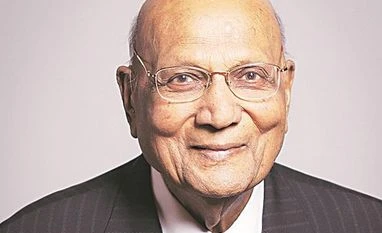 "I told Modi after he became PM, I'm an admirer of Indira Gandhi: Swraj Paul")











