India Coronavirus Dispatch: October sees first monthly decline in cases

Kerala's curve defies all predictions, sharp drop in Punjab cases, and lack of audit mechanism in Aarogya Setu--news on how the country is coping with the pandemic
coronavirus
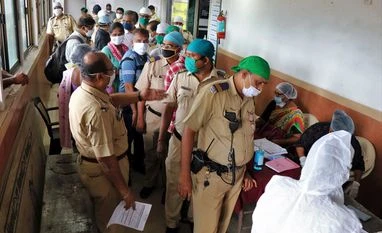
A healthcare worker wearing personal protective equipment(PPE) collects a nasal sample from a policeman, during a check-up campaign for the coronavirus disease (COVID-19) set up inside a police station, in Mumbai.
Shreegireesh Jalihal New Delhi
4 min read Last Updated : Nov 02 2020 | 3:08 PM IST
Aarogya Setu: New revelations regarding the Aarogya Setu app show a lack of audit mechanisms and any procedure for anonymisation of data. To allay fears over privacy of data, the govt had put in place the Aarogya Setu Protocol. RTI responses by NIC now show that the body was unable to put implement these protocols. For example, the body only has a generic list of categories with whom data can be shared, not an actual list as mandated by protocol. Further, NIC shared no details about third parties that have been given Aarogya Setu data. Recipients of data are supposed to have safeguards put in place but the RTI responses showed that NIC has no clue if the safeguards were implemented. MEITY and the NIC have also not created any reasonable security practices. Read more here.

Kerala woes: Kerala’s pandemic curve is now defying all predictions after months of handling the crisis well. It is now on the list of top ten states with maximum caseloads. State officials point towards the fact that its mortality rate is lower than the national average as marker of success. However, experts say that shoddy handling of the situation during Onam is to blame for the state’s distress. They add that the state needs to respond immediately with new strategies to combat the pandemic and by on-boarding more professionals in the policy process. IMA’s Kerala branch has had a similar criticism of the govt’s response, saying it has relied too much on bureaucracy and too less on medical experts. Districts like Malappuram, Kozhikode and Thiruvananthapuram, with high population densities, are especially vulnerable say, experts. Read more here

IN NUMBERS

First monthly drop: October was the first month when the number of new cases dipped compared to the previous ones. October saw around 1.83 million new infections, which was significantly lower than the 2.6 million seen in September and 2.01 million reported in August. The rise in total number of cases for the month stood at 28 per cent — the lowest so far. The percentage monthly growth of new infections has also been declining progressively. Further, Sunday was the eighth consecutive day that this number has remained below 50,000. Even the number of active cases has fallen to 561,000. There has also been a shift in the states that are reporting the highest caseload. Read more here

Punjab cases drop: Punjab, which had been recording the country’s highest Covid fatality rate for a while, has some good news finally. The north Indian state has seen its average daily cases sharply drop to around 670 in October after witnessing over 2,000 in September. State authorities say that the number of contacts being traced has also gone down since the number of positive cases have dipped as well. More than 60,000 new infections were reported in the state in September but the tally stood at just 19,752 cases by October 30. Experts attribute this to the global epidemiological trend of Covid-19 infections starting to dip after peaking. Punjab has so far reported 133,000 positive cases, of which 4,101 are active. However, the state’s fatality rate — 3.1 per cent — is still fairly high. Read more here. 

COMMENT

‘Unhealthy’ bias: The writer argues that women health workers have had to deal with sexism in the fight against the pandemic. She says she disagrees with the people who called the crisis a ‘social leveller’. The UN, she points out, has even called gender inequality the ‘shadow pandemic’. The situation is especially bleak in India, which is ranked 150th out of 153 countries in the health-and-survival parameter of the global gender-gap index in 2019–20. Access to healthcare is also disproportionate for the two genders. But more concerning, she says, is the misogyny and patriarchal attitudes built into medical training which have showed up during the pandemic. The gender gap is especially pronounced at the top of the health care pyramid. This, she says, affects policy-making and management itself. Read more here. 

One subscription. Two world-class reads.

Already subscribed? Log in

Subscribe to read the full story →
*Subscribe to Business Standard digital and get complimentary access to The New York Times

Smart Quarterly

₹900

3 Months

₹300/Month

SAVE 25%

Smart Essential

₹2,700

1 Year

₹225/Month

SAVE 46%
*Complimentary New York Times access for the 2nd year will be given after 12 months

Super Saver

₹3,900

2 Years

₹162/Month

Subscribe

Renews automatically, cancel anytime

Here’s what’s included in our digital subscription plans

Exclusive premium stories online

  • Over 30 premium stories daily, handpicked by our editors

Complimentary Access to The New York Times

  • News, Games, Cooking, Audio, Wirecutter & The Athletic

Business Standard Epaper

  • Digital replica of our daily newspaper — with options to read, save, and share

Curated Newsletters

  • Insights on markets, finance, politics, tech, and more delivered to your inbox

Market Analysis & Investment Insights

  • In-depth market analysis & insights with access to The Smart Investor

Archives

  • Repository of articles and publications dating back to 1997

Ad-free Reading

  • Uninterrupted reading experience with no advertisements

Seamless Access Across All Devices

  • Access Business Standard across devices — mobile, tablet, or PC, via web or app

Topics :CoronavirusCoronavirus TestsCoronavirus Vaccine

Next Story



