India Coronavirus Dispatch: Role of epidemiologists in battling Covid-19

Karnataka now has fourth biggest caseload, families struggle to import life-saving drug, and how immunity is developed against Covid-19-a roundup of news on how India is dealing with the pandemic

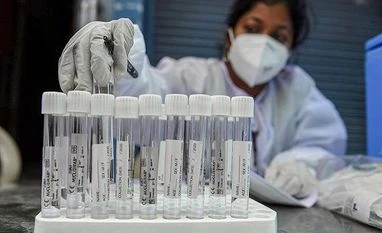
A health worker arranges swab samples on a tray for Covid-19 test at a medical camp, during Unlock 2.0,  in Chennai
A health worker arranges swab samples on a tray for Covid-19 test at a medical camp, during Unlock 2.0, in Chennai
Sarah Farooqui New Delhi
5 min read Last Updated : Jul 15 2020 | 4:14 PM IST
Interview
 
Kerala finance minister Thomas Isaac on how his govt is handling the pandemic: Watch this interview with Kerala finance minister Issac Thomas about the successes and challenges of tackling the financial impact of the Covid-19 pandemic, public health systems, and on managing the future.

How ‘disease detectives’ are battling the coronavirus pandemic: In this interview Professor Madhukar Pai, Canada Research Chair in Epidemiology and Global Health at McGill University, Montreal, explains the role of epidemiologists or ‘disease detectives’ in battling Covid-19, why it’s tough for epidemiological disease models to predict the future of the pandemic and the challenge of imperfect data. 
 
Opinion 
 
When a Covid-19 vaccine is discovered, will it be freely available and be affordable to all? The global intellectual property system allocates the rights of the vaccine to the inventor or owner. These rights are granted for a limited period – 14 years in the US and the European Union, 20 years in most other places. During this time, the owner has a monopoly over the product and can demand a price they seem fit. However, this provision has often been used by the inventors to limit access to essential goods to people who need them or to smaller companies that could manufacture the product at affordable prices. Read here to understand whether the Covid-19 vaccine will become freely available and be affordable. 

Sending the right message: Communicating science means explaining details to the public without condescension, admitting mistakes, promptly rebutting pseudo-science, being guided by data and interpreting the logic for policies undertaken. Instructions provided by scientists may be inconvenient and fail to take note of election cycles. Even when the situation is long-drawn-out, as in the Covid-19 pandemic, listening to scientists and putting their advice into practice can lead to better management of the pandemic, as seen in New Zealand and some Southeast Asian countries. Read more here

Managing Covid-19 

22 states match WHO standard of 140 Covid tests/day per million, Gujarat & Bengal lag behind: The central government has directed states to scale up testing for the novel coronavirus disease to 140 tests per day per million population, in line with what WHO considers a comprehensive testing volume. Currently, 22 states are already testing as much, according to the data shared by the health ministry Tuesday at a joint press conference with the ICMR. India is conducting about 201 tests per day per million population. Read more here
 

As lockdown squeezes grey market, families struggle to import life-saving drugs: India’s lockdown, which began on March 25, hit the imports of all pharmaceuticals. With no new stock coming in, both patients and grey market vendors started running out of vigabatrin. Whatever residual stock remained with Indian vendors started getting sold at marked-up prices. So, Indian patients have begun to individually import small consignments into the country, though this is expensive for many and has put a vital medicine out of their reach. Read more here. https://www.indiaspend.com/as-lockdown-squeezes-grey-market-families-struggle-to-import-life-saving-drugs/

Karnataka goes past Gujarat, now has fourth biggest caseload: On Tuesday, Karnataka overtook Gujarat to become the state with the fourth highest caseload of novel Coronavirus infections in the country. The state added about 2,500 new cases, and now has over 44,000 infections. Karnataka, the fastest growing state in the country right now, has seen a very sharp rise in its Coronavirus numbers. In the two weeks of this month, the state has added almost 29,000 new cases, an average of more than 2,000 per day. Just a week prior to that, it was detecting between 350 and 450 cases every day. Read more here

Understanding Covid-19

How effective are the drugs approved to treat Covid-19 patients in India? The Central Drugs Standard Control Organisation (CDSCO) has approved five drugs in the last month for Covid-19 treatment – two antiviral: Remdesivir and Favipiravir – and three for easing the symptoms: Dexamethasone, Tocilizumab and Itolizumab. These drugs’ use is bound to birth complications considering there are doubts about the evidence the government has furnished – or not – to approve their use. Read more here.
 
Aerosols are a bigger coronavirus threat than WHO guidelines suggest: When someone coughs, talks or even breathes, they send tiny respiratory droplets into the surrounding air. The smallest of these droplets can float for hours, and there is strong evidence that they can carry live coronavirus if the person is infected. Aerosol concentrations can be reduced with increased ventilation, although recirculating the same air should be avoided unless the air can be effectively filtered prior to reuse. When possible, open doors and windows to increase fresh air flow. Read more here

How immunity is developed: A longitudinal study by the researchers from King’s College London — first reported by The Guardian on Sunday — has suggested that immunity to Covid-19 might be lost in months. The suggestion is based on a steep drop in patients’ antibody levels three months after the infection. A look at the findings, implications and limitations of the new study, and the broader question of how the body develops immunity against an infection. Read more here

Enable GingerCannot connect to Ginger Check your internet connection
or reload the browserDisable in this text fieldEditEdit in GingerEdit in Ginger×

One subscription. Two world-class reads.

Already subscribed? Log in

Subscribe to read the full story →
*Subscribe to Business Standard digital and get complimentary access to The New York Times

Smart Quarterly

₹900

3 Months

₹300/Month

SAVE 25%

Smart Essential

₹2,700

1 Year

₹225/Month

SAVE 46%
*Complimentary New York Times access for the 2nd year will be given after 12 months

Super Saver

₹3,900

2 Years

₹162/Month

Subscribe

Renews automatically, cancel anytime

Here’s what’s included in our digital subscription plans

Exclusive premium stories online

  • Over 30 premium stories daily, handpicked by our editors

Complimentary Access to The New York Times

  • News, Games, Cooking, Audio, Wirecutter & The Athletic

Business Standard Epaper

  • Digital replica of our daily newspaper — with options to read, save, and share

Curated Newsletters

  • Insights on markets, finance, politics, tech, and more delivered to your inbox

Market Analysis & Investment Insights

  • In-depth market analysis & insights with access to The Smart Investor

Archives

  • Repository of articles and publications dating back to 1997

Ad-free Reading

  • Uninterrupted reading experience with no advertisements

Seamless Access Across All Devices

  • Access Business Standard across devices — mobile, tablet, or PC, via web or app

Topics :CoronavirusCoronavirus Vaccine

Next Story