As India celebrated its 70th Independence Day, the country has emerged as a strong world power but still has "a long way to go", top American experts feel.
Amid a debate on whether India has 'succeeded or failed', Alyssa Ayers, Senior Fellow for India, Pakistan and South Asia at top American think-tank Council on Foreign Relations, said India's economy has given it "greater global heft, and is powering the expansion and modernisation of the country's military capabilities."
"As India continues to tackle its pressing economic, human development and social equity goals, my own view on this question is that India, like China, is emerging as a world power even as it still has a large unfinished domestic agenda."
In an article posted on Forbes website, Ayers said, "But at the same time, over the past decade India has become a much larger factor in foreign and international economic policy around the world. So, India at 70: still much to do at home to fulfil the aspirations of India's constitution and the promise of justice, liberty, equality and fraternity that it resolves to secure for all its citizens."
Ayers noted that a more vocal India is emerging on the world stage, one that sees itself as a "leading power" and seeks to fulfil that ambition.
Fritz Lodge, a Middle East and international economics analyst at The Cipher Brief said in an op-ed written on the occasion of India's Independence Day that Prime Minister Narendra Modi is forging ahead with his dream of driving India into the position of economic, military and geopolitical power deserving of the world's second most populous nation.
"Despite the pain of the currency ban and the deep institutional obstacles his government faces, Prime Minister Modi has retained his popular support. He will need all that political capital and more to enact the radical changes he has envisioned," Lodge wrote.
Milan Vaishnav, a senior fellow in the South Asia Programme at the Carnegie Endowment for International Peace, told Cipher Brief that one of the best ways to characterise the current Indian government is that it is pro-business but not necessarily pro-market.
"Modi has generally been good for business but not always good for a level playing field," he said.
According to Sarah Watson, Associate Fellow in the Wadhwani Chair for US-India Policy Studies at The Center for Strategic and International Studies, India under Prime Minister Modi is trying to execute two highly ambitious programs: modernising its military and increasing the relative weight of domestic military production.
However, Pankaj Mishra writing for The New York Times said India seems to have missed its appointment with history.

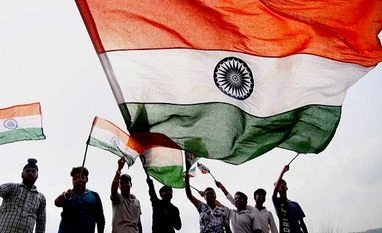 "India emerged as strong world power, but has a long way to go: US experts")


 Connect with us on WhatsApp