India is showing developing countries how to quickly transition to solar

The rise of ReNew came as India was wrestling with myriad problems: widespread corruption, a frustrating bureaucracy, and the high cost of capital
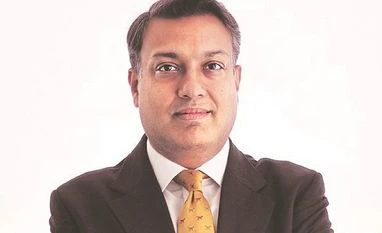
Sumant Sinha, Founder & CEO, ReNew Power
Sumant Sinha, founder & CEO, ReNew Power
Akshat Rathi | Bloomberg
3 min read Last Updated : Apr 21 2021 | 11:17 AM IST
Ten years ago, solar power barely existed in India. Now the country is adding more generation capacity from solar than coal. It’s showing other sun-soaked developing countries how to rapidly deploy cleaner energy even in the face of corruption, red tape, and weak finances.

Much of India’s success in executing a tricky energy transition can be attributed to entrepreneurs such as Sumant Sinha. The 56-year-old is the chairman and managing director of ReNew Power Pvt Ltd., the country’s largest renewable energy developer.

The rise of ReNew came as India was wrestling with myriad problems: widespread corruption, a frustrating bureaucracy, and the high cost of capital. When the company was founded in 2011, the country ranked 134th in the World Bank’s ease of doing business index, below China and Russia.


And soon there was another crisis: Between 2006 and 2008, banks had approved a flurry of loans to build new coal power plants based on the view that demand for electricity would surge in India. When demand didn’t meet expectations years later, many coal power plants were forced to operate for fewer hours than planned, and the country’s public-sector banks were left with vast amounts of poor-quality debt. That made it hard for companies such as ReNew to raise money domestically, increasing the stakes for Sinha. “I was basically putting all my life’s savings into this venture,” he says.

But he had the right kind of experience for the moment. Before ReNew, Sinha was an investment banker in the U.S. and later the chief operating officer of Indian wind turbine maker and renewable energy operator Suzlon Energy Ltd. He “understood, right off the bat, that renewables was as much a finance story as it was a technology story,” says Kanika Chawla, program manager at United Nations Energy, which coordinates work on energy issues across various UN bodies. Chawla was previously with an environmental think tank that worked closely with ReNew on energy and finance modeling.

Sinha had to make two big moves to expand his company: tap international finance and secure domestic customers. Goldman Sachs Group Inc. had been looking for investments in an emerging market after completing a successful multibillion-dollar exit from wind power in the U.S. in 2007. Sinha made a winning pitch to Goldman, which acquired the largest stake in ReNew for $470 million, with investments starting in 2011. Goldman’s confidence in the company helped Sinha raise funds from institutional investors in Canada, Japan, and the United Arab Emirates.


While money was coming in from backers, Sinha had to ensure there would be domestic consumers to pay for ReNew’s clean power. In India’s highly regulated electricity sector, the customers he found weren’t households but state utilities. Just like the banks, these utilities were heavily indebted from years of mismanagement and poorly enforced regulations. So ReNew created teams around the country that could ensure utilities coughed up what they owed.

That focus and determination helped ReNew dominate the market, even as the competition grew. In February it agreed to merge with blank-check company RMG Acquisition Corp. II and list in the U.S. at a valuation of $8 billion.

One subscription. Two world-class reads.

Already subscribed? Log in

Subscribe to read the full story →
*Subscribe to Business Standard digital and get complimentary access to The New York Times

Smart Quarterly

₹900

3 Months

₹300/Month

SAVE 25%

Smart Essential

₹2,700

1 Year

₹225/Month

SAVE 46%
*Complimentary New York Times access for the 2nd year will be given after 12 months

Super Saver

₹3,900

2 Years

₹162/Month

Subscribe

Renews automatically, cancel anytime

Here’s what’s included in our digital subscription plans

Exclusive premium stories online

  • Over 30 premium stories daily, handpicked by our editors

Complimentary Access to The New York Times

  • News, Games, Cooking, Audio, Wirecutter & The Athletic

Business Standard Epaper

  • Digital replica of our daily newspaper — with options to read, save, and share

Curated Newsletters

  • Insights on markets, finance, politics, tech, and more delivered to your inbox

Market Analysis & Investment Insights

  • In-depth market analysis & insights with access to The Smart Investor

Archives

  • Repository of articles and publications dating back to 1997

Ad-free Reading

  • Uninterrupted reading experience with no advertisements

Seamless Access Across All Devices

  • Access Business Standard across devices — mobile, tablet, or PC, via web or app

Topics :renewable energysolar energywind power generation

Next Story



