


Visa cost whiplash: $100,000 H-1B fee reinstated after being struck down
The fee remains in effect for certain H-1B petitions after a federal court paused its earlier decision striking down the policy, pending an appeal.
 "h1b visa")
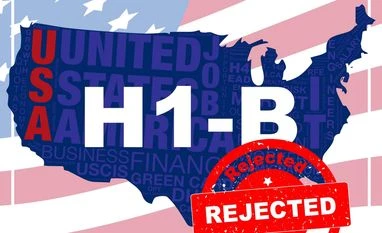
The H-1B is a non-immigrant work visa that allows U.S. employers to temporarily hire foreign workers in specialty occupations. Photo: Shutterstock
Listen to This Article
Just days after a federal court struck down the controversial $100,000 H-1B fee, employers and foreign workers are once again facing uncertainty after a Massachusetts district court temporarily reinstated the charge pending an appeal.
For companies relying on skilled foreign talent, the latest ruling means that US Citizenship and Immigration Services (USCIS) can continue requiring the fee for certain H-1B petitions filed through consular notification channels. The fee, introduced under a presidential proclamation issued by President Donald Trump, has been widely criticized by businesses as excessively costly and potentially disruptive to hiring plans.
The court's June 12 decision pauses an earlier June 8 ruling that had invalidated the fee. At the time, the court found that the $100,000 charge effectively functioned as a tax and had been imposed without proper legal authority. The ruling also concluded that the policy violated provisions of the Administrative Procedure Act.
However, the government has now appealed that decision and is expected to seek permission from the U.S. Court of Appeals for the First Circuit to keep the fee in place while the broader legal challenge is heard.
What this essentially means is that the US court has temporarily allowed USCIS to continue charging the controversial $100,000 H-1B fee while the government appeals a ruling that struck down the policy.
Also Read

 "H1B visa, US visa, passport, H-1B")
 "H1-B, H1B, visa, US, passport")
 "h1b visa")
 "h1b visa")
The issue
On Friday, a federal district court in Massachusetts temporarily stayed its June 8 ruling that vacated the U.S. Citizenship and Immigration Services (USCIS) policy implementing the $100,000 H-1B fee created by President Trump’s September 19 presidential proclamation. The district court is briefly staying its June 8 vacate order until the First Circuit Court of Appeals has the opportunity to rule on the government’s anticipated request for a stay of the vacate order. The government must file its stay request with the First Circuit by June 18 in order for the district court vacate ruling to remain paused.
Background
On June 8, the federal district court in Massachusetts vacated the $100,000 H-1B fee policy in its entirety, taking the position that the fee amounts to a tax, for which a presidential proclamation and agency implementation was not a proper exercise of power. The court also declared the policy to be in excess of statutory authority, procedurally deficient, and arbitrary and capricious, and therefore, unlawful under the Administrative Procedure Act (APA). The district court granted summary judgment to the plaintiffs, meaning that, for the time being, USCIS was not permitted to collect the $100,000 fee from H-1B employers. The district court case is State of California et al. v Markwayne Mullin, et al., Case No., 1:25-cv-13829 (D. Mass., filed Dec. 12, 2025).
What does the latest development mean?
The development means that, for now, employers filing H-1B petitions that are submitted for or only approvable through consular notification may still be required to pay the $100,000 fee.
The legal battle stems from a September 19 presidential proclamation issued by President Donald Trump that introduced the $100,000 fee for certain H-1B petitions. On June 8, the Massachusetts district court ruled that the fee was unlawful, finding that it effectively functioned as a tax that could not be imposed through a presidential proclamation and agency action alone.
The court further held that the policy exceeded statutory authority, was procedurally flawed and violated the Administrative Procedure Act (APA). It granted summary judgment to the plaintiffs, temporarily preventing USCIS from collecting the fee.
That relief, however, has now been put on hold pending further review by the appellate court.
The outcome of the government's stay request will determine whether USCIS can continue collecting the fee while the broader appeal proceeds. If the appeals court grants the request, the fee could remain in effect for months as litigation continues. If denied, the June 8 order striking down the policy would be reinstated.
For employers, the latest development creates a difficult planning environment. Companies considering overseas hires must once again account for the possibility of paying the six-figure fee, even though the policy's long-term future remains uncertain.
Foreign professionals hoping to secure H-1B sponsorship could also feel the impact. Immigration lawyers warn that some employers may delay hiring decisions or reconsider international recruitment plans until greater clarity emerges.
"Unless and until a contrary court order is issued or unless the government misses the June 18 filing deadline for a stay request, USCIS is permitted to require the $100,000 fee for the approval of H-1B petitions that are filed for or only approvable for consular notification. It is expected that there will be further litigation developments and swift implementation changes regarding the $100,000 fee with little or no notice, so employers should stay in close contact with immigration counsel," said immigration law firm Fragomen in a post.
The district court has given the government until June 18 to formally request a stay from the appeals court. If the government misses that deadline, the June 8 order striking down the fee could take effect again. If the appeals court grants the stay, the fee may remain in place throughout what could be a lengthy appeals process.
For now, businesses relying on overseas talent must continue factoring in the $100,000 fee until an appeals court rules on the government's request.
The decision prolongs uncertainty for companies and foreign professionals as the legal battle over the Trump-era visa fee moves to an appeals court.
More From This Section
 "switzerland")
 "US Visa")
 "Donald Trump,Trump")
 "Job hiring, hire")
 "pregnant, maternity, mother")
Topics : H1B Visa
Don't miss the most important news and views of the day. Get them on our Telegram channel
First Published: Jun 15 2026 | 11:10 AM IST