
India strives for relationship with China built on mutual interest: EAM
India strives to have a relationship with China that is built on mutual sensitivity, respect and interest, EAM S Jaishankar said
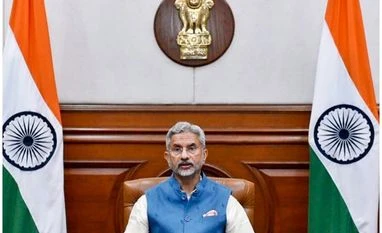 "India strives for relationship with China built on mutual interest: EAM")
WebinarsNew
Deep DiveNew
Explore Business Standard
India strives to have a relationship with China that is built on mutual sensitivity, respect and interest, EAM S Jaishankar said
India strives to have a relationship with China that is built on mutual sensitivity, respect and interest, External Affairs Minister S Jaishankar has said as he asserted that betterment and strengthening of the Indo-Pacific is a shared objective of New Delhi and Washington, amid Beijing's growing military presence in the strategic region.
China, which has territorial disputes with many countries in the strategic Indo-Pacific region, has been opposing the US' proactive policy specifically in the disputed South China Sea.
We continue to strive for a relationship with China, but one that is built on mutual sensitivity, mutual respect and mutual interest, Jaishankar told a group of Indian reporters here on Wednesday as he concluded his four-day visit to the city.
Responding to a question on how India and the US are planning to handle a belligerent China, he said the two countries have a shared objective of betterment and strengthening of the Indo-Pacific.
Where Indian and US interests converge, and they do, I think, is on the stability and the security, the progress, the prosperity, the development of the Indo Pacific. Because you have seen, even in the case of Ukraine, a war fought a great distance away, has the potential, has the capability of actually creating turbulence across the world in terms of implications for the daily lives of people, he said.
Jaishankar said the world today is very globalised, extremely interlocked, and interdependent.
It is therefore to say that we have skin in the game is an understatement. I think we have vital stakes today in ensuring that the larger region is stable, that it is secured; that there is cooperation and that the focus is on the right things, he said.
To my view, what we have seen in recent years, is an India whose interests and inclinations extend sufficiently eastwards into the Pacific and the United States, which is open enough to work flexibly and comfortably with partners going beyond the orthodox limitations in the past of treaties and alliances, he said.
Jaishankar said the world has changed and everyone appreciates that no single country by itself can shoulder the responsibilities or the burdens of international peace and common good.
To me, in a globalised world, countries are conscious today that the world is not unipolar, it's not bipolar, they need there to be multiple players, they need to work together, there are common interests at stake out here. The rest of the region actually looks at the more capable countries to pull their weight and work together. I think that's the kind of situation, he said.
India-US is one part of it, we have a bigger gathering, coordination in terms of the quad, but there are still bigger ones. If you look at two new initiatives, the Indo Pacific Economic Framework and the Indo Pacific initiative for maritime domain awareness, they extend beyond them. They are open and they have multiple players out there, he noted.
In November 2017, the US, Australia, India and Japan gave shape to the long-pending proposal of setting up the Quad to develop a new strategy to keep the critical sea routes in the Indo-Pacific free of any influence, amidst China's growing military presence in the strategic region.
China claims nearly all of the disputed South China Sea, though Taiwan, the Philippines, Brunei, Malaysia and Vietnam all claim parts of it. Beijing has built artificial islands and military installations in the South China Sea. Beijing is also involved in a maritime dispute with Japan over the East China Sea.
I believe in defining international affairs and in positive terms, that's usually how diplomacy is done. So, I would urge you to think of it as really, betterment or strengthening of the Indo Pacific as a shared objective between us, Jaishankar said.
(Only the headline and picture of this report may have been reworked by the Business Standard staff; the rest of the content is auto-generated from a syndicated feed.)
First Published: Sep 29 2022 | 8:16 AM IST


 Connect with us on WhatsApp