
India tops the list of global poor: UN report
Poverty rate in southeast Asia fell from 45% in 1990 to 14% in 2010
 "India tops the list of global poor: UN report")
WebinarsNew
Deep DiveNew
Explore Business Standard
Poverty rate in southeast Asia fell from 45% in 1990 to 14% in 2010
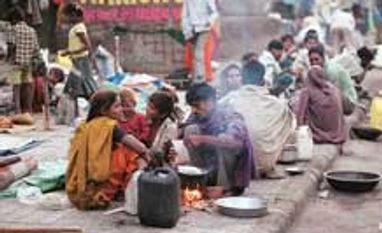
India tops the list of countries with the largest share of global extreme poor though the poverty rate in southeast Asia as whole saw a substantial fall from 1990 to 2010, a new United Nations report said.
The poverty rate in southeast Asia fell from 45% in 1990 to 14% in 2010. Although poverty remains widespread in south Asia, progress in the region has been substantial, the Millenium Development Goals Report 2014 said.
However, India had the largest share of global poor at 32.9%, more than countries like China, Nigeria and Bangladesh, said the report which was released here Wednesday.
India also had the highest child mortality rate worldwide in 2012 with 1.4 million children dying before reaching their fifth birthday, it said.
In 2012, south Asia accounted for 2.1 million of the 6.6 million deaths in children under five worldwide. With 1.4 million children dying before reaching their fifth birthday, India had the highest child mortality rate worldwide, the report which tracks progress in achieving the Millenium Development Goals (MDGs) said.
The eight MDGs, with a number of sub-targets covering a range of poverty, hunger, health, gender equality, education and environmental indicators, were agreed by all countries as an outgrowth of the UN Millennium Summit in 2000, most with a due date of 2015.
"India's role in global development is the most important in the world. The MDGs can't be reached globally if they are not reached here," Lise Grande, United Nations Resident Coordinator for India, said while releasing the report.
"The new post 2015 framework cannot succeed if it does not reflect the aspirations, and does not have the commitment and support of India," she added.
The report said south Asia has made great progress on the MDGs, but requires greater efforts to achieve most targets by the end of 2015.
In South Asia, the adjusted net enrolment rate of children of primary school age increased from 80% in 2000 to 94% in 2012.
However, gender parity in the region is yet to be achieved in Afghanistan and Pakistan - where there are at most nine girls for every ten boys enrolled - and Bangladesh and Nepal - where the gender disparity favours girls.
First Published: Jul 16 2014 | 1:52 PM IST


 Connect with us on WhatsApp