The 40-year journey of India's space programmes
From relying on Russia for its first satellite launch, India is fast becoming a global hub to launch satellites
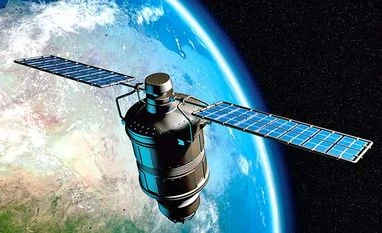
T E NARASIMHAN Chennai On April 19, 1975, Aryabhata, India’s first satellite, was successfully launched into space with the help of a Russian rocket. It was a free ride offered by Russia to India. Today, India ferries satellites from other countries for a fee. After overcoming several odds, Indian satellite manufacturing has travelled a long distance over the past four decades. Interestingly, the Indian space programme, too, has come a long way from the days of a control room inside a church and ferrying rockets on a bicycle. The Indian Space Research Organisation (ISRO) can now build satellites weighing over 3,000 kg. Arybhata weighed just 358kg.
During its early days, there was a lack of basic infrastructure and ISRO used whatever it had. According to UR Rao, former chairman of ISRO, even a toilet was converted into a data receiving centre for Aryabhata. He added that it was a huge challenge, considering everything started from scratch and ISRO had only two and a half years on hand if the satellite had to be launched on the Russian rocket.
“A majority of the team members were new to this field. Building a clean, thermo-vacuum room and other facilities were all new to us,” recalled Rao. This satellite was developed at a cost of around Rs 3 crore.
Even today, ISRO continues to use many of the techniques that were used in the early days. The name Aryabhata was given by the then prime minister, Indira Gandhi, to whom three names were suggested. After Aryabhata, Bhaskara-1, an experimental satellite for earth observation, was launched on June 7, 1979.
The Indian space agency then built the APPLE (Ariane Passenger Payload Experiment) communication satellite, which laid the ground for the INSAT (Indian National Satellite System) series satellites that could perform multiple functions: telecommunication, television broadcast, meteorological monitoring and imaging.
INSAT-1B, a communication satellite, was a major breakthrough for Indian space research. From one-tonne satellites, the INSAT series started growing in weight to become three-tonne ones. After this, ISRO began making satellites for other countries.
India is now reckoned as a major player in the global satellite launch and manufacturing industry and the market leader in vending images sent by its remote sensing/earth observation satellites. It has demonstrated its frugal engineering with the Mars Orbiter Mission (MOM) that was successfully launched at one-third of the cost of the developed countries.
Meanwhile, ISRO is gearing up to launch the GSLV-MkII rocket, which will carry a GSAT communication satellite, a technology developed indigenously in India, sometime in August 2015. The rocket will be powered by an indigenous cryogenic engine.

 "The 40-year journey of India's space programmes")

