
It's an 8-hour work day now: New era dawns for Mumbai police after 154 yrs
He assured that the new duty hours would not, in any manner, compromise on the duties and services of the police to the public
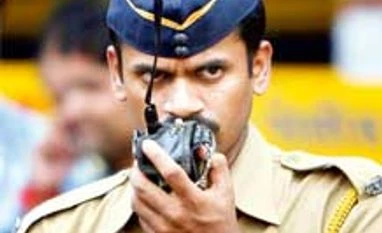 "It's an 8-hour work day now: New era dawns for Mumbai police after 154 yrs")
Explore Business Standard
He assured that the new duty hours would not, in any manner, compromise on the duties and services of the police to the public
For the first time in its 154-year history, the Mumbai police has switched over to a compact eight-hour duty schedule for the lower echelons from Wednesday, Police Commissioner Datta Padsalgikar announced here.
The decision came after a trial was carried out at the Deonar Police Station last year, followed by other police stations across the city and suburbs.
"After it was successful, we have shifted to the eight-hour duty schedule for the constabulary and assistant sub-inspector levels. Gradually, it will go up to officer ranks," Padsalgikar told media persons.
However, he assured that the new duty hours would not, in any manner, compromise on the duties and services of the police to the public.
Giving details, Deputy Commissioner of Police (Operations) Deepak Deoraj said that now "around 75 per cent of the 94 police stations, plus the Traffic Branch, and all other departments" are covered under the new duty schedule.
"Depending on the police station strength versus the local population, we hope to implement it 100 per cent within a month or so," Deoraj told IANS.
The Mumbai police -- whose origin dates back to 1661, when a tiny force of 500 was formed by the then Portuguese rulers of the seven islands comprising Mumbai -- currently has a staff strength of nearly 50,000 for the 18 million residents.
Besides the regular round-the-clock force, it also has one of the biggest traffic police forces in the state with more than a 100 posts for the estimated 4.2 million vehicles on Mumbai roads.
In recent years, the city's main protection force has been rocked by a series of on-duty deaths, mental and physical illnesses owing to long and uncertain duty hours, often stretching to more than 16 hours.
During emergencies or contingencies, there were instances when the police personnel, both men and women, remained in the field for even 72 hours, hitting their morale, playing havoc with health and rocking family ties.
Padsalgikar, who masterminded the 'Mission 8 Hours' initiative, and Deoraj assured that now the police personnel can spend more time with their families and experience less stress which would improve the overall health of the force.
The modern police force started in December 1864 when a Briton, Sir Frank Souter, was appointed the first Police Commissioner of (then) Bombay, under the Bombay Presidency, while the last one was Police Commissioner A.E. Caffin till August 15, 1947.
On Independence Day, J.S. Bharucha became the first Indian to be appointed Commissioner of Bombay police -- considered among the finest in the world despite various constraints.
First Published: Jan 17 2018 | 8:33 PM IST

