While the origin of UCC dates back to colonial India, when the British government first submitted the draft in 1835, the Uniform Civil Code has been a key agenda of the ruling BJP, as the issue was also included in the party’s 2019 Lok Sabha election manifesto. The BJP-led central government has also been pushing for a legislation for the UCC in Parliament.
The saffron party has argued that implementation of the UCC would remove all inequalities and create a gender-equal society. The minorities, on the other hand, say that the code would lean towards Hindu personal laws.
The Hindu Code Bill, whose first draft was submitted in 1951 after the Constitution was adopted, was adopted in 1956 as the Hindu Succession Act. The Bill reformed the Hindu personal law relating to intestate or unwilled succession among Hindus, Buddhists, Jains, and Sikhs. The amendment gave women property rights in their fathers' estates. An amendment to the Act in the year 2005 elevated women to Class-I heirs, giving daughters a share in the father's, equal to that of the sons.

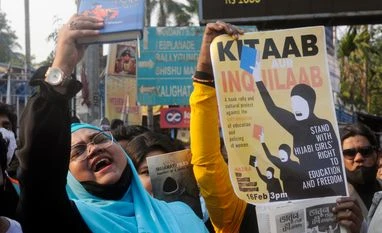 "Karnataka HC on hijab row and the bigger debate of Uniform Civil Code")










 Connect with us on WhatsApp