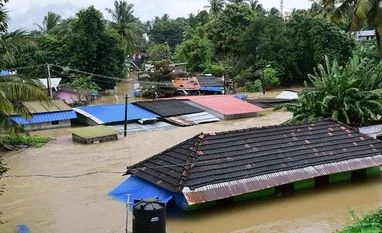
The worst flooding in more than a century has left hundreds dead, hundreds of thousands homeless, billions of dollars of losses and the lingering risk of disease in Kerala. Blame the monsoon, or rickety infrastructure?
Pinning down the cause of the disaster is important in assessing Prime Minister Narendra Modi’s spending priorities as he heads into an election year. India’s Budget certainly needs an overhaul.
While the Kerala downpours were unusually heavy, most of the damage was done after the sluice gates of brimming dams were opened to release water into parts of the southwestern coast that were already on the verge of inundation. The flooding itself is no surprise: Almost 15 per cent of India’s land mass is prone to floods and every year, on average, as many as 2,000 lives are lost and up to 8 million hectares (20 million acres) affected, at a cost of Rs 18 billion ($258 million).
All told, New Delhi spends five times more on items like subsidised credit to farmers and crop insurance than it does on water resources. Only 3 per cent of water spending is on flood management, and an even smaller proportion of that is in capital outlays. In this year’s Budget, the government made no allocation at all for flood forecasting and management.
The consequences of this neglect will broaden. In Kerala, the flooding is likely to wipe out many farmers and small businesses, and will hit banks’ ability to recover loans. Nationwide, banks’ exposure to the state is about 3 per cent of total lending, according to Jefferies analysts, though it ranges from 41 per cent for South Indian Bank to 4 per cent or less for the likes of ICICI Bank and HDFC Bank.
For all the talk of infrastructure spending increasing by one-fifth in the budget, new project announcements declined more than 20 per cent in the fiscal first quarter, led by an almost 80 per cent drop in the government’s portion — in turn a reflection of slowing completions of earlier projects. Institutional investors are pulling back, despite Modi’s globe-trotting roadshows when he was elected in 2014.
Bold handouts may please the voters, but if the cost is measured in lives, it’s time for a rethink.

 "Kerala floods show Modi has his priorities wrong")












 Connect with us on WhatsApp