Kudankulam plant linked to south grid
First unit of 1,000-Mw nucleur reactor to achieve commercial production by Dec
BS Reporters Chennai/Mumbai The much-awaited synchronisation of the Kudankulam Nuclear Power Plant (KNPP)’s first reactor with the power grid took place on Tuesday morning.
The synchronisation, connecting with the grid to check the functionality, coincided with the meeting between Russian President Vladimir Putin and Prime Minister Manmohan Singh. The reactors at the plant were constructed with Russian collaboration.
Nearly 160 Mw of power from the first unit of 1,000 Mw of KNPP was connected to the southern grid at 2.45 am. After synchronising and operating for two hours, according to schedule, the unit was taken out. Synchronising will start again late on Wednesday. Some more tests would be required but the power generation would continue.
“Unit-1 synchronisation was done at 2.45 am on Tuesday morning, generating 75 Mw,” said R S Sundar, site director. “Currently, our clearances are for up to 500 Mw. Later, we would need to have a regulatory clearance, subject to which we can increase power production further. We expect in another two to three weeks, we will reach 500 Mw. We have to reach the next 500 Mw in two stages — 750 Mw and 1,000 Mw. By December, we expect to be in full power.”
KNPP — at Kudankulam village in Tirunelveli district, 700 km from Chennai — is a 2,000-Mw project comprising two units, each of which will generate 1,000 Mw. There are plans to set up four more units of 1,000 Mw each. Once those are ready, the plant would have six reactors, with 6,000-Mw capacity. To set up the third and fourth units, talks between the governments of India and Russia are in advanced stages.
For units 1 and 2, the initial cost was estimated at Rs 13,171 crore. But it went up to Rs 17,270 crore due to delays, rupee depreciation and other factors.
Minister of State for Personnel, Public Grievances & Pensions V Narayanasamy had said of the 2,000 Mw that would be generated, Karnataka would get 442 Mw, Tamil Nadu 925 Mw (including 10 per cent home state entitlement), Kerala 266 Mw and Puducherry 67 Mw. The remaining 300 Mw was yet to be allocated.
The Union government had decided to allocate 100 Mw of the unallocated power to the state once Unit-1 becomes operational.
The reactors at Kudankulam were built by the Nuclear Power Corporation of India Limited and Russia’s Atomstroyexport company, a subsidiary of Rosatom (the regulatory body of the Russian nuclear complex). The Indian government signed a contract with the former Soviet Union to build the plant in 1988, but construction started only in 1997 due to the political and economic upheaval in Russia after the collapse of the Soviet Union in 1991.
Construction of the first two units was halted in September 2011 following protests by villagers around the plant. Work resumed in March 2012.

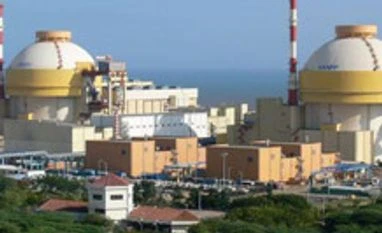 "Kudankulam plant linked to south grid")


 Connect with us on WhatsApp