Economies accounting for more than half the world’s gross domestic product have now set, or are in the process of setting, goals to reach net-zero greenhouse gas emissions within decades.
The US, India and Brazil are the only countries among the 10 largest economies still holding out. With Joe Biden set to become president, the US stance is likely to change. How will India, which continues to rely heavily on domestic coal and imported oil, react to such pressure? (Let’s keep Brazil for another day.)
“India has to push back against it,” said Thomas Spencer, a researcher at the energy and climate think tank The Energy and Resources Institute (TERI), who authored reports on negotiations leading up to the landmark Paris Agreement.
That rich countries are setting net-zero goals cannot be reason enough for India, he said. The South Asian country, home to more than 1.3 billion people, has a tiny carbon footprint per person—about 2 metric tons compared to the U.S.’s 16 metric tons. India’s historical contribution to global carbon emissions is one-eighth that of the US and a quarter that of China.
“But the pushback shouldn’t be just to say ‘no’ but to also say what you can do and what you can’t do and why,” said Spencer.
During the negotiations leading up to the 2015 Paris climate agreement, India linked up with China to form a bloc of developing countries that pushed back against the climate targets developed countries were urging them to adopt, arguing they were unfair.
But with China pulling so far ahead of India economically and technologically, and with military conflicts between the countries on the northern border in the region of Ladakh, there aren’t many reasons for India to stay on the sidelines during the upcoming negotiations in Glasgow scheduled for 2021.
“India can put a little bit more pressure on China,” said Spencer. “That includes asking for transparency around the investments China is making under the Belt and Road Initiative.”
Even as China aims to bring its emissions to net-zero by 2060, it is financing the building of coal power plants and other carbon-heavy infrastructure in many countries. Apart from further lowering the cost of solar and wind power, India has been credited with successfully scaling up the roll out of energy efficient LED lights.
It has also pushed industry to adopt energy efficiency measures through a cap and trade program, where the government sets minimum standards and allows companies to trade credits for going further than the mandates require. The government is now considering a similar scheme for trading greenhouse gases. But India can and should go much further, Spencer said.
“A success story like low-cost renewables broadens minds about what is possible in other sectors,” he said. “Beyond specific actions on energy efficiency, activity in other sectors is not particularly aggressive.” It’s important that India remains part of the climate conversation. The country is one of the most vulnerable to climate impacts and, Spencer argues, India’s climate actions give it soft power and credibility that are crucial on the global stage, even if it hasn’t set a net-zero goal yet.

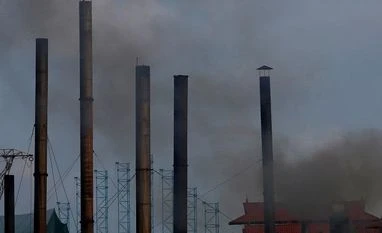 "Big economies aim for net-zero emissions but India cannot afford to yet")












 Connect with us on WhatsApp