Lunar eclipse 2020 today: Time, how and where to watch Strawberry eclipse

Lunar eclipse timing, meaning, how to watch and where to watch chandra grahan? Here's all you must know about lunar eclipse 2020
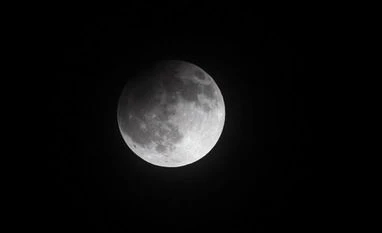
lunar eclipse
A lunar eclipse occurs when Earth places itself between the Sun and the moon. Photo: Shutterstock
BS Web Team New Delhi
2 min read Last Updated : Jun 05 2020 | 1:33 PM IST
Skygazers are in for a visual treat, with lunar eclipse set to appear today. The phenomenon can be viewed in most parts of Asia, Europe, Africa, Australia, South America, Pacific, Indian Ocean and Antartica. Astronomers across the world have termed today's lunar eclipse as 'Strawberry Moon Eclipse'.

Lunar Eclipse: All you need to know

What is lunar eclipse or chandra grahan?

A lunar eclipse occurs when Earth places itself between the Sun and the moon. There are three types — total, partial and penumbral — with the most dramatic being a total lunar eclipse, in which Earth's shadow completely covers the moon. Today's lunar eclipse will be a penumbral lunar eclipse.

How to watch lunar eclipse?

Throughout history, eclipses have inspired awe and even fear. However, unlike solar eclipses that are potentially dangerous to stare directly at and may cause blindness, lunar eclipses are completely safe to look at with naked eye.

There is no need for any eye protection; a good pair of binoculars and clear sky are enough to enjoy the experience. Anyone on the night side of the moon can witness the eclipse. Simply look at the sky and you may see it.

Phase of lunar eclipse. Photo: Shutterstock

Lunar eclipse 2020 timings

Lunar eclipse will begin at 11:15 pm on June 5 and end at 2:34 am on June 6. The entire phenomenon will last approximately 3 hours and 19 minutes.

Best time to watch lunar eclipse/ chandra grahan 2020

The best time for the skygazers to catch the glimpse of the lunar eclipse will be at 12:54 am.

What is a penumbral lunar eclipse?

A penumbral lunar eclipse happens when the Sun, Earth, and the Moon are imperfectly aligned and the Earth blocks some of the Sun’s light from directly reaching the Moon with the outer part of its shadow. This part is called the penumbra and thus comes the name penumbral lunar eclipse. Since the penumbra is much fainter than the dark core of the Earth’s shadow, a penumbral eclipse is hard to distinguish from the normal Full Moon.

Why is today's lunar eclipse called 'Strawberry moon eclipse'?

According to Maine Farmer's Almanac, June marks the ripening of strawberry crops in the United States (north-eastern), thus, the full moon occurring in this season is called the Strawberry Moon.

One subscription. Two world-class reads.

Already subscribed? Log in

Subscribe to read the full story →
*Subscribe to Business Standard digital and get complimentary access to The New York Times

Smart Quarterly

₹900

3 Months

₹300/Month

SAVE 25%

Smart Essential

₹2,700

1 Year

₹225/Month

SAVE 46%
*Complimentary New York Times access for the 2nd year will be given after 12 months

Super Saver

₹3,900

2 Years

₹162/Month

Subscribe

Renews automatically, cancel anytime

Here’s what’s included in our digital subscription plans

Exclusive premium stories online

  • Over 30 premium stories daily, handpicked by our editors

Complimentary Access to The New York Times

  • News, Games, Cooking, Audio, Wirecutter & The Athletic

Business Standard Epaper

  • Digital replica of our daily newspaper — with options to read, save, and share

Curated Newsletters

  • Insights on markets, finance, politics, tech, and more delivered to your inbox

Market Analysis & Investment Insights

  • In-depth market analysis & insights with access to The Smart Investor

Archives

  • Repository of articles and publications dating back to 1997

Ad-free Reading

  • Uninterrupted reading experience with no advertisements

Seamless Access Across All Devices

  • Access Business Standard across devices — mobile, tablet, or PC, via web or app

Topics :lunar eclipseastronomy

Next Story



