
NCW received 23,722 complaints in 2020, its highest in past six years
The National Commission for Women received 23,722 complaints of crimes committed against women in 2020, the highest in the last six years
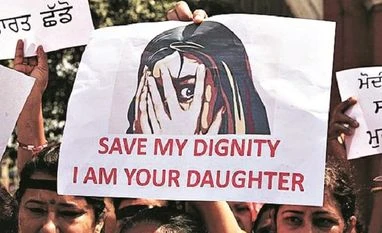 "NCW received 23,722 complaints in 2020, its highest in past six years")
WebinarsNew
Deep DiveNew
Explore Business Standard
The National Commission for Women received 23,722 complaints of crimes committed against women in 2020, the highest in the last six years
The National Commission for Women received 23,722 complaints of crimes committed against women in 2020, the highest in the last six years.
Nearly one-fourth of the total complaints were of domestic violence, according to NCW data.
Among states, the highest number of complaints were received from Uttar Pradesh at 11,872 followed by Delhi 2,635, Haryana 1,266 and Maharashtra 1,188, it added.
Of the 23,722 complaints, 7,708 complaints were received under the right to live with dignity clause.
The right to live with dignity clause takes into account the emotional abuse of women.
According to the NCW data, a total of 5,294 complaints were related to domestic violence.
NCW Chairperson Rekha Sharma said economic insecurity, increased stress levels, anxiety, financial worry, and lack of other such emotional support from parents/family's side may have resulted in domestic violence in many instances in 2020.
"More so, home has become the workplace of both the spouses and as well as schools and colleges for their children. In such situations, women are multitasking being professional at the same time supporting their families from the same space. But the biggest challenge for women this year is not only to adapt but to thrive in this unprecedented situation," she told PTI.
The number of complaints received in 2020 have been the highest in six years. In 2014, a total of 33,906 complaints were received, according to the NCW data.
The NCW was flooded with complaints of domestic violence in March as the lockdown, imposed in view of the coronavirus outbreak, forced women to remain confined to their homes with their abusers.
The number of complaints of domestic violence went on increasing through the months and in July, a record number of 660 such complaints were received.
Sharma underlined how domestic violence remained a serious concern for the commission through the year.
"Victims of domestic violence are distanced from their regular support systems making it difficult for them to call out for help. The series of COVID-19 lockdowns in India reduced the opportunities of reporting of domestic violence cases," she said.
The NCW chairperson said the lockdown incapacitated women by preventing them from moving to safer places in cases of violence and abuse, reduced contact with the natal family which is usually the first point of contact for the victim.
"The machinery under the Protection of Women from Domestic Violence Act had not been identified as an essential service during the lockdown. Hence, protection officers and NGOs were not able to visit households of victims and police officers being at the frontline to tackle COVID-19 were overstretched to help victims effectively," she said.
After the right to live with dignity and domestic violence, the third highest number of complaints have been of harassment of married women or dowry harassment at 3.784 followed by that of molestation at 1,679.
According to the data, 1,276 complaints of police apathy towards women and 704 complaints of cyber crime were received by the commission.
As many as 1,234 complaints of rape and attempt to rape were received while 376 complaints of sexual harassment were received by the commission in 2020, the data showed.
Sharma encouraged women to reach out to the NCW whenever they want.
In 2021, she said the commission will continue to work with commitment to ensure justice and empowerment to even the last woman standing at periphery and will continue with its endeavours.
Women rights activist Yogita Bhayana, who heads the People Against Rape in India (PARI), the high rate might also be because of high awareness among women to talk about such incidents and report them.
"There has been an increase because there is also an increase in awareness because women are getting more proactive reporting it and talking about it. Earlier they used to suppress their grievances and the government is also spreading awareness and women get motivated by other women reporting it," she said.
"Because of social media the reporting of domestic violence has increased. Women have become more vocal and they have less tolerance which is very good," Bhayana added.
Another women rights activist Shamina Shafiq said the government needs to talk strongly about domestic violence.
"Unfortunately a man feels it is his right to beat a woman and he enjoys the fact that I am the one in control of the life of another person. There should be writing on the wall that spousal violence is wrong," she said.
(Only the headline and picture of this report may have been reworked by the Business Standard staff; the rest of the content is auto-generated from a syndicated feed.)
First Published: Jan 03 2021 | 3:47 PM IST


 Connect with us on WhatsApp