India is planning to use 400-500 million doses to vaccinate around 250 million people by July 2021 for the coronavirus infection, Health Minister Harsh Vardhan said on Sunday, while laying out the broad outlines of the country’s vaccine strategy.
States have been asked to submit the lists of populations that will be first in line to receive the vaccination, such as frontline health workers and those with underlying health conditions, by October-end. The government has also started the exercise of getting a lowdown on the status of vaccine development. The Centre, said Vardhan, is seeking commitments from vaccine makers to make the maximum number of doses available for India’s inventory and supply chain management. “The government is committed to taking all measures to ensure equitable access to vaccines,” he said.
Industry experts believe India has a fairly developed cold chain network, especially due to an extensive national immunisation programme.
India has used the Electronic Vaccine Intelligence Network (eVIN) to track information on vaccine supply chain and stocks across the country during the Covid-19 pandemic. This was done to ensure smooth immunisation across the country. This system provides real-time information on stocks and temperatures across registered vaccine storage sites in India. The network has 23,900 digital temperature loggers and 41,420 cold chain handlers for digital record-keeping.
Vardhan said the government is also working on ramping up human resource and training capacity on a massive scale.
The committee led by V K Paul, member-health, Niti Aayog, is drawing up the plan for the process of vaccine procurement and distribution. “Vaccine procurement is being done centrally and each consignment will be tracked real-time until delivery to ensure it reaches those who need it most,” the minister said.
The government is hoping to have its ducks in a row by the time the vaccines are ready to ensure swift roll-out of the immunisation programme.
Vardhan also said that vaccines will be distributed according to pre-decided priority and in a programmed manner. “To ensure transparency and accountability, details of the entire process will be shared in the coming months.”
The data around immunity already achieved against Covid-19 in the country will be taken into account while finalising the vaccine-related plans. However, the government has not yet shared the total cost of vaccination and ways of financing it.
On September 26, Serum Institute’s chairman Adar Poonawalla tweeted: “Will the government of India have Rs 80,000 crore available, over the next one year? Because that’s what @MoHFW_INDIA needs, to buy and distribute the vaccine to everyone in India. This is the next concerning challenge we need to tackle.”
India’s vaccine making abilities are among the highest in the world and the government has said in the past that even if any other country succeeds in developing a vaccine before us, either India or China will ultimately have to scale it up.

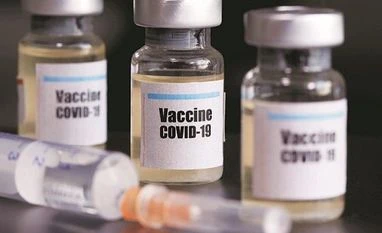 "Nearly 500 mn doses of Covid-19 vaccine by July 2021, says Harsh Vardhan")












