Scientists have developed a system that can predict the spread of dengue in different parts of India, based on climatic factors, an advance that may help take preventive measures against the deadly infection.
Researchers from the University of Liverpool in the UK identified the climatic risks for dengue disease outbreaks in different climatic zones in the country through the states of Punjab, Haryana, Rajasthan, Gujarat and Kerala.
The team, in collaboration with researchers from Indian Institute of Chemical Technology (IICT) in Hyderabad and National Institute of Pharmaceutical Education and Research (NIPER) in Guwahati, focused on changes in a factor called 'extrinsic incubation period (EIP)' of the dengue virus by taking into account daily and monthly mean temperatures in these areas.
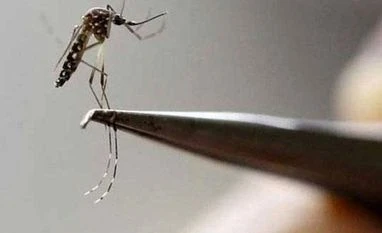
EIP is the time taken for incubation of the virus in the mosquito. During this period, after the mosquito draws a virus-rich-blood meal, the virus escapes the gut, passes through the mosquito's body and reaches it salivary glands.
Once this happens, the mosquito is infectious and capable of transmitting the virus to a human host. It has been found that climatic conditions play an important role in EIP.
Lower temperatures (17-18 degrees Celsius) result in longer EIPs thereby leading to decreased virus transmission.
With increasing temperatures, feeding increases because of enhanced metabolism of the mosquito, leading to shorter EIPs.
Even a five-day decrease in the incubation period can hike transmission rate by three times, and with an increase in temperature from 17 to 30 degrees Celsius, dengue transmission increases fourfold.
However, a further increase in temperature beyond 35 degrees Celsius is detrimental to the mosquito survival.
Researchers observed that except for Gujarat which comprises of arid regions, there was a strong correlation between rainfall and dengue disease burden.
They propose an increase in breeding grounds for mosquitoes as a major reason for this finding.
The study found that Kerala being warm (temperature range 23.5-30 degrees Celsius) and wet and with short EIPs (9-14 days) experiences the highest number of dengue cases.
It has been found that EIP is the shortest during the monsoon season in most states and therefore there is an enhanced risk of dengue during this time.
It is important to take into account the dynamic EIP estimates in different regions in assessing disease burden.
"This climate-based dengue forecasting model could help health authorities to assess the disease intensity in a geographic region, based on that they can plan disease control operations well in advance and optimise the use of resources meticulously," said Srinivasa Rao Mutheneni of IICT, who led the study.
Changes in temperature affecting the extrinsic incubation period of the virus, future changes in the climate might have a substantial effect on dengue and other vector-borne disease burden in India.
"Though such methods are in vogue for disease control operations, we are still in the initial stages of implementation of such strategic control methods," Rao said.
"Factors such as population density and migration also need to be included for future risk assessment studies," he said.

 "New method developed to forecast dengue spread: Here's how it works")


 Connect with us on WhatsApp