
Scientists identify cell structure that can help develop new Covid-19 drugs
They said the viruses replicate by transforming host cell membranes into peculiar double-membrane vesicle (DMV) structures
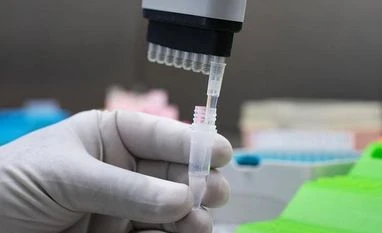 "Scientists identify cell structure that can help develop new Covid-19 drugs")
premium
WebinarsNew
Deep DiveNew
Explore Business Standard
They said the viruses replicate by transforming host cell membranes into peculiar double-membrane vesicle (DMV) structures
Scientists have identified a structure in host cells which the novel coronavirus likely uses to synthesise components that will be assembled into fully infectious viruses, an advance which may lead to the development of new drugs against Covid-19.
The study, published in the journal Science Advances, uncovers a coronavirus-specific structure in cells, which may act as a target for much-needed antiviral strategies against this family of viruses.
According to the scientists, including those from the Leibnitz Institute of Experimental Virology in Germany, coronaviruses replicate their large genomes in the host cell's cytosol -- the jelly-like material in which the components of the cell are suspended.
They said the viruses replicate by transforming host cell membranes into peculiar double-membrane vesicle (DMV) structures.
In the current study, they noted that the newly made viral genetic material, its RNA molecule, needs to be exported from these DMVs to the cytoplasm to be packaged into complete, infectious forms of the virus.
To date, however, they said no openings to the cytosol have been detected in the DMV replication compartments.
Seeking to understand how viral RNA is exported from sealed DMVs, the scientists, Georg Wolff and his colleagues, used a powerful microscopy technique called electron tomography to visualise the middle stage of infection of a cell by mouse hepatitis coronavirus.
They said this virus was used instead of the novel coronavirus SARS-CoV-2 due to biosafety constraints for such electron microscopy studies.
The scientists identified a coronavirus-specific crown-shaped structure -- a molecular pore spanning the two DMV membranes -- that likely plays a role during RNA release from the compartment.
Then using pre-fixed samples of SARS-CoV-2-infected cells, they showed that the structure is also present in SARS-CoV-2-induced DMVs.
According to the researchers, this structure may be a generic complex with a pivotal role in the coronavirus replication cycle, facilitating the export of newly synthesised viral RNA from the DMVs to the cytosol.
"Although the exact mode of function of this molecular pore remains to be elucidated, it may offer a general coronavirus-specific drug target," the scientists noted.
Already subscribed? Log in
Subscribe to read the full story →

3 Months
₹300/Month
1 Year
₹225/Month
2 Years
₹162/Month
Renews automatically, cancel anytime

Premium stories handpicked daily by our editors


News, Games, Cooking, Audio, Wirecutter & The Athletic
Digital replica of our daily newspaper — with options to read, save, and share


Insights on markets, finance, politics, tech, and more delivered to your inbox
In-depth market analysis & insights with access to The Smart Investor


Repository of articles and publications dating back to 1997
Uninterrupted reading experience with no advertisements


Access Business Standard across devices — mobile, tablet, or PC, via web or app
First Published: Aug 08 2020 | 6:22 PM IST

