
No official word yet on Chinese Foreign Minister's possible visit to India
Nepal has already announced that he will visit Kathmandu from March 25 to 27
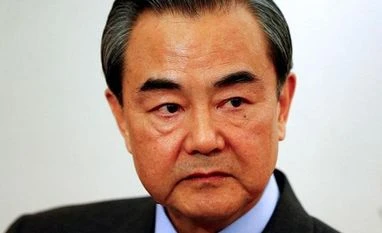 "No official word yet on Chinese Foreign Minister's possible visit to India")
WebinarsNew
Deep DiveNew
Explore Business Standard
Nepal has already announced that he will visit Kathmandu from March 25 to 27
Deliberations between India and China over a possible visit here by Chinese Foreign Minister Wang Yi have gone down to the wire with neither side providing any clarity over it.
Wang began a two-day trip to Pakistan on Tuesday primarily to attend a meeting of the Council of Foreign Ministers of the Organisation Islamic Cooperation (OIC) as a special guest.
Nepal has already announced that he will visit Kathmandu from March 25 to 27.
It was China that sent a proposal to India for a visit to New Delhi by Wang as part of his tour of the region, people familiar with the development had said last week.
It is learnt that the two sides were looking at Wang's visit to India during the window between his trip to Pakistan and Nepal and that it could take place on Thursday or Friday.
There is no official comment or clarity on Wang's proposed visit to India either by New Delhi or by Beijing yet.
However, it was very clear that Wang's comments on Kashmir at the OIC opening ceremony in Islamabad on Tuesday have not gone down well in New Delhi with it strongly rejecting the remarks.
In its reaction, the Ministry of External Affairs (MEA) said on Wednesday that other countries, including China, have no locus standi to comment on India's internal matters and that they should note that India refrains from public judgement of their internal issues.
If the visit takes place notwithstanding India's strong reaction to Wang's remarks, then it will be the first trip by a senior Chinese leader to India after the eastern Ladakh military standoff began in May 2020.
In reflection of India's consistent position on ties with China, Prime Minister Narendra Modi on Monday apprised his Australian counterpart Scott Morrison about the situation in eastern Ladakh and emphasised that peace and tranquillity in the region is an essential prerequisite for normalisation of India's ties with China.
Modi made the comments at a virtual summit with the Australian prime minister.
At the 14th India-Japan summit on Saturday, New Delhi conveyed to Tokyo the same line that its ties with Beijing cannot be business as usual until peace is restored in the eastern Ladakh region.
India and China have held a series of diplomatic and military talks in the last one-and-half years to resolve the eastern Ladakh row.
External Affairs Minister S Jaishankar and Wang held several rounds of talks in Moscow and Dushanbe to defuse tensions in eastern Ladakh during the period.
In September 2020, Jaishankar and Wang held extensive talks in Moscow on the sidelines of a conclave of the Shanghai Cooperation Organisation (SCO) during which they reached a five-point agreement to resolve the eastern Ladakh border row.
The pact included measures like quick disengagement of troops, avoiding action that could escalate tensions, adherence to all agreements and protocols on border management and steps to restore peace along the LAC.
The two foreign ministers had held a bilateral meeting on the sidelines of another SCO meeting in Tajik capital city Dushanbe in July last year with a focus on the border row. They again met in Dushanbe in September.
India has been consistently maintaining that peace and tranquillity along the Line of Actual Control (LAC) was key for the overall development of the bilateral ties.
Earlier this month, Wang said some forces have always sought to stoke tensions between China and India, in an apparent reference to the US.
Wang's proposed visit, if it takes place, is expected to provide an opportunity for the two sides to exchange views on the crisis in Ukraine as well.
On March 11, India and China held the 15th round of high-level military dialogue to resolve the pending issues in the eastern Ladakh region.
The eastern Ladakh border standoff between the Indian and Chinese militaries erupted on May 5, 2020, following a violent clash in the Pangong lake areas.
Both sides gradually enhanced their deployment by rushing in tens of thousands of soldiers as well as heavy weaponry.
As a result of a series of military and diplomatic talks, the two sides completed the disengagement process last year in the north and south banks of the Pangong lake and in the Gogra area.
Each side currently has around 50,000 to 60,000 troops along the Line of Actual Control (LAC) in the sensitive sector.
(Only the headline and picture of this report may have been reworked by the Business Standard staff; the rest of the content is auto-generated from a syndicated feed.)
First Published: Mar 23 2022 | 11:45 PM IST


 Connect with us on WhatsApp