Pepsi and Coca Cola are set to invest $1.4 billion in Pakistan in coming years, a statement from Prime Minister Imran Khan's office said, after executives from the two companies met with Khan.
Pepsi planned to make " a further investment of $1.2 bln" in next five years, Khan's office said on Wednesday, after the company's chief executive for Asia, Middle East and North Africa, Mike Spanos, led a Pepsi delegation that met Khan.
Coca Cola, which has a $500 million business already in Pakistan, also pledged a planned $200m investment in the coming two to three years, Khan's office added in a separate statement on Tuesday.
Coca Cola did not immediately respond to a request for comment. Pepsi could not be reached for comment.
Khan, who assumed power in August, has inherited a wobbly economy reeling from a ballooning current account deficit, which has prompted the government to seek loans from allies China and Saudi Arabia, as well as enter bailout talks with the International Monetary Fund (IMF).
But many consumer companies see Pakistan, the world's sixth most populous country, as a hot consumer market due to its fast-growing population of 208 million people.
Khan told the delegations that Pakistan was committed to facilitate businesses and investors in Pakistan, where 100 million people are below the age of 30.
"It is this youth bulge which we believe is attracting global companies in Pakistan along with the increasing affluence of the middle class," said Suleman Rafiq Maniya, head of research at local brokerage house Shajar Capital.
Pakistan's economy has been rising in recent years due to a sharp reduction in electricity blackouts and a steep drop in militant attacks, which was a major deterrent to foreign investment. China's pledge to loan $60 billion in infrastructure spending has also helped growth.
Despite this, growth, which hit 5.8 percent growth in 12 months to end of June, is due to fall below 5 percent in coming years, according to the IMF.

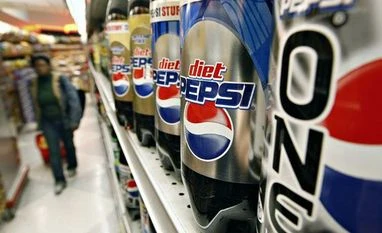 "Pakistan gets fizz: Govt says Pepsi and Coca Cola will invest $1.4 bln")











