
Parliament passes criminal procedure (identification) bill
The Parliament on Wednesday passed a bill that seeks to make the investigation of crime more expeditious and increase the conviction rate
 "Parliament passes criminal procedure (identification) bill")
WebinarsNew
Deep DiveNew
Explore Business Standard
The Parliament on Wednesday passed a bill that seeks to make the investigation of crime more expeditious and increase the conviction rate
The Parliament on Wednesday passed a bill that seeks to make the investigation of crime more expeditious and increase the conviction rate.
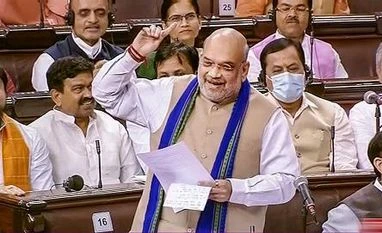
The Criminal Procedure (Identification) Bill, 2022, bill was passed by Rajya Sabha on Wednesday after a reply by Home Minister Amit Shah. The bill was passed by Lok Sabha on April 4.
Amit Shah said the purpose of the bill is to decrease the crime rate, increase the rate of conviction of criminals and boost the security of the country.
The Minister said the bill will not compromise the privacy of any individual and that the rules of the Act will be notified after proper scrutiny.
"Our law is 'bachha' (nothing) in terms of strictness as compared to other nations. There are more stringent laws in countries like South Africa, UK, Australia, Canada and the US, which is why their conviction rate is better," he said.
Shah said the Bill is about safeguarding the "human rights of the victims of crimes, and not just criminals."
"We do not have the intention of misusing the provisions of the Bill. It is meant to keep our police ahead of criminals. Next-generation crimes cannot be tackled with old techniques; we have to try to take the criminal justice system to the next era," he said.
He sought to allay apprehensions voiced by the opposition about the possible misuse of the new legislation.
"Best technology will be used for safeguarding data and there will be the training of manpower," Shah said.
The bill provides for legal sanction for taking appropriate body measurements (finger impressions, palm-print and foot-print impressions, photographs, iris and retina scan, physical, and biological samples) of persons who are required to give such measurements to "make the investigation of crime more efficient and expeditious".
It also seeks to empower the National Crime Records Bureau to collect, store and preserve the record of measurements and for sharing, dissemination, destruction and disposal of records. It also empowers a magistrate to direct any person to give measurements and empowers police or prison officers to take measurements of any person who resists or refuses to give measurements.
A total of 17 members participated in the debate on the Bill. Some opposition members termed the bill "unconstitutional" and that it should be sent to the select committee.
(Only the headline and picture of this report may have been reworked by the Business Standard staff; the rest of the content is auto-generated from a syndicated feed.)
First Published: Apr 06 2022 | 9:36 PM IST


 Connect with us on WhatsApp