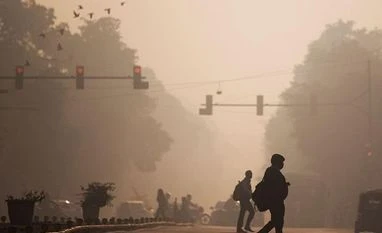
PM2.5 pollution in Delhi during July-Sept quarter, 2nd lowest in 5 yrs: CSE
Delhi's PM2.5 pollution average for the July-August-September quarter this year stood at 37 microgram per cubic metre, only marginally higher than 5-year low of 36 microgram per cubic metre in 2020
Press Trust of India New Delhi Delhi's PM2.5 pollution average for the July-August-September quarter this year stood at 37 microgram per cubic metre, only marginally higher than the five-year low of 36 microgram per cubic metre recorded during 2020, according to an analysis by the Centre for Science and Environment (CSE).
Pollution levels in the July-August-September quarter were preceded by one of the most polluted summers this year, unlike in 2020 when the trimester followed the cleanest ever summer (March-May) due to extraordinary conditions created because of hard pandemic lockdowns, the green think tank said.
"Therefore, it is important to understand what aided in cleaning up the Delhi air. Looking at the rainfall data it becomes evident that distribution of rainfall has a relatively higher impact on seasonal air quality than the absolute quantity of rainfall," it said.
There have been 45 rainy days in July, August and September this year as compared to just 39 rainy days in the quarter last year.
"These six extra rainy days helped keep the seasonal average low despite total rainfall this monsoon having been just one-third of the previous monsoon," the CSE said.
These additional rainy days also pushed the regular start of bad air quality days further down the month of October, it said.
The PM2.5 average for the quarter stood at 38 microgram per cubic metre in 2021, 41 microgram per cubic metre in 2019 and 43 microgram per cubic metre in 2018.
The CSE had on Thursday said the average PM2.5 pollution in Delhi in the winter season has declined by about 20 per cent as compared to the pre-pandemic period.
The PM2.5 concentration for winter (October 1 to February 28) used to hover around 180-190 microgram per cubic metre before the pandemic. It has come down to 150-160 microgram per cubic metre since then, it said.
However, the seasonal average is still over 150 per cent above the 24-hour standard (60 microgram per cubic metre) and almost four times the annual standard (40 microgram per cubic metre) despite the improvement, the green think tank noted.
(Only the headline and picture of this report may have been reworked by the Business Standard staff; the rest of the content is auto-generated from a syndicated feed.)

 "PM2.5 pollution in Delhi during July-Sept quarter, 2nd lowest in 5 yrs: CSE")


 Connect with us on WhatsApp