Poverty, child, maternal deaths high in India: UN report
Says one third of the world's 1.2 billion extreme poor lived in India alone in 2010
Press Trust of India United Nations India continues to battle poverty, child and maternal deaths, according to a United Nations report on the Millennium Development Goals that said while several key global targets have been met, more sustained effort is needed to cover disparities by the 2015 deadline.
The 'Millennium Development Goals Report 2014', launched by UN Secretary-General Ban Ki-moon here yesterday, said many global MDG targets on reducing poverty, increasing access to improved drinking water sources, improving the lives of slum dwellers and achieving gender parity in primary schools have already been met.
Many more goals are within reach by their 2015 target date, the report said, adding that if current trends continue, the world will surpass MDG targets on malaria, tuberculosis and access to HIV treatment.
The report is the most up-to-date "global scorecard" on efforts to achieve the eight mostly anti-poverty goals agreed by world leaders at a UN summit in 2000.
It, however, said that some MDG targets related to largely preventable problems with available solutions, such as reducing child and maternal mortality and increasing access to sanitation, are slipping away from achievement by 2015, despite major progress.
"We know that achievements have been uneven between goals, among and within regions and countries, and between population groups," Ban said, adding that unless imbalances are addressed through bolder and more focused interventions, some targets will not be met, including in key areas such as childbirth, maternal mortality, universal education, and environmental sustainability.
The overwhelming majority of people living on less than 1.25 dollars a day belong to Southern Asia and sub-Saharan Africa, with one third of the world's 1.2 billion extreme poor living in India alone in 2010.
India also had the highest number of under-five deaths in the world in 2012, with 1.4 million children dying before reaching their fifth birthday.
While Southern Asia has made "strong and steady" progress in reducing child deaths by more than halving its under-five mortality rate, yet nearly one in every three deaths still takes place in the region.
Despite progress in all world regions, the maternal mortality ratio in developing regions - 230 maternal deaths per 1,00,000 live births in 2013 - was 14 times higher than that of developed regions, which recorded only 16 maternal deaths per 1,00,000 live births in 2013.
Highlighting the extreme differences in maternal mortality among countries, the report said that almost one-third of all global maternal deaths are concentrated in the two populous countries - India and Nigeria.
India has an estimated 50,000 maternal deaths (17 per cent) while Nigeria has an estimated 40,000 maternal deaths (14 per cent).

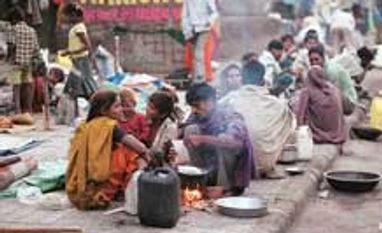 "Poverty, child, maternal deaths high in India: UN report")


 Connect with us on WhatsApp