
Quick Covid breathalyser test for mass screening developed
The test, described in the journal ACS Nano, could allow rapid screening of people attending large gatherings, such as conferences and weddings
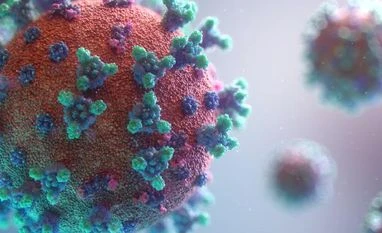 "Quick Covid breathalyser test for mass screening developed")
WebinarsNew
Deep DiveNew
Explore Business Standard
The test, described in the journal ACS Nano, could allow rapid screening of people attending large gatherings, such as conferences and weddings
Scientists have developed a new handheld breathalyser test that can non-invasively and accurately diagnose COVID-19, even in asymptomatic individuals, in less than five minutes.
The test, described in the journal ACS Nano, could allow rapid screening of people attending large gatherings, such as conferences and weddings.
Currently, the gold standard for COVID-19 testing is a technique called reverse transcription-polymerase chain reaction (RT-PCR).
However, researchers from Nanyang Technological University, Singapore, noted that RT-PCR is slow, requires an uncomfortable nasopharyngeal swab for sample collection and must be performed in a lab.
The rapid antigen test (RAT) is much quicker but has a higher rate of false negatives and positives, they said.
The team wanted to develop a quick, convenient and accurate breathalyser test that would be suitable for on-site screening of large numbers of people.
The researchers designed a handheld breathalyser that contains a chip with three surface-enhanced Raman scattering (SERS) sensors attached to silver nanocubes.
When a person exhales into the device for 10 seconds, compounds in their breath chemically interact with the sensors.
The researchers then load the breathalyser into a portable Raman spectrometer that characterises the bound compounds based on changes to the molecular vibrations of the SERS sensors.
They found that Raman spectra from COVID-positive and -negative people were different in regions responsive to ketones, alcohols and aldehydes, which they used to develop a statistical model for COVID diagnosis.
Scientists have previously developed breathalyser-type tests for COVID-19, which rely on differences in concentrations of volatile organic compounds exhaled by those infected with the coronavirus. However, most of the past tests require bulky, nonportable instruments for analysis.
The team tested the new breathalyser on 501 people in hospitals and airports in Singapore.
The participants were shown by RT-PCR to be negative (85.2 per cent), positive and symptomatic (8.6 per cent), or positive and asymptomatic (6.2 per cent) for the coronavirus.
The breathalyser had a 3.8 per cent false-negative and 0.1 per cent false-positive rate, comparable to RT-PCR tests, but it could be completed on-site in less than five minutes.
The breathalyser could someday be a new tool to reduce the silent spread of COVID-19 in communities, the researchers added.
(Only the headline and picture of this report may have been reworked by the Business Standard staff; the rest of the content is auto-generated from a syndicated feed.)
First Published: Feb 03 2022 | 1:12 PM IST


 Connect with us on WhatsApp