
Risk persists even though cases starting to plateau in parts of India: WHO
On January 21, the country reported a total of 347,254 new COVID-19 cases after which the daily infection count has been reducing
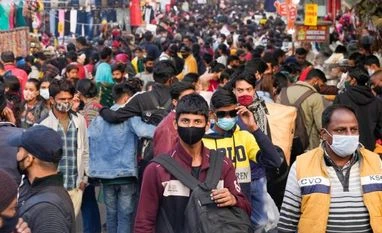 "Risk persists even though cases starting to plateau in parts of India: WHO")
Explore Business Standard
On January 21, the country reported a total of 347,254 new COVID-19 cases after which the daily infection count has been reducing
Even though some cities or states in India may be beginning to see plateauing of COVID-19 cases, the risk persists and focus must be on reducing transmission and implementing situation-specific measures, senior WHO official Poonam Khetrapal Singh said.
The Health Ministry said on Thursday that early indications of Covid cases plateauing have been reported in certain geographies in the country but the trend needs to be observed.
Responding to a question that coronavirus cases have started plateauing in India, Dr Poonam Khetrapal Singh, Regional Director, WHO South-East Asia Region said the risk of COVID-19 remains high and no country, irrespective of their current transmission scenario, is "out of the woods" yet.
"Hence, even though some cities or states may be beginning to see plateauing of cases, the risk persists. We need to continue to remain vigilant. Our focus must be on reducing transmission. Implementing situation-specific public health and social measures and increasing vaccine coverage - that's the way forward for all countries in the ongoing pandemic," Singh told PTI in an interview.
On January 21, the country reported a total of 347,254 new COVID-19 cases after which the daily infection count has been reducing. A decline in Covid cases and positivity rate has been especially observed in Maharashtra, Uttar Pradesh, Delhi, Odisha, Haryana and West Bengal.
Asked if the pandemic is entering in endemic stages, Singh said, currently "we are still in the midst of the pandemic and the focus should be to curtail the virus spread and save lives".
"By becoming endemic doesn't mean that the virus will not be a cause of concern," she said.
Compared to the COVID-19's Delta variant, she said Omicron is able to more rapidly infect the tissues of the upper respiratory tract rather than the lungs, which may also help the spread of this variant.
"There appears to be a lower risk of severe disease and death following Omicron infection as compared to other variants. However, due to the very high numbers of cases, many countries have seen a significant increase in the incidence of hospitalization, putting pressure on healthcare systems," she said.
Data suggests that infection with Omicron may be associated with a lower risk of hospitalization compared to infection with Delta, Singh said, but noted that the severity of illness increases with age and in the presence of underlying medical conditions and among people who are not vaccinated.
She stressed on the need to rapidly accelerate efforts to vaccinate all at-risk populations in all countries.
"There is growing evidence on vaccine effectiveness for Omicron, but we still have a lot to learn. So far, we think that vaccines are less effective against Omicron infection and symptomatic disease compared to Delta. Having a booster shot seems to increase protection," she said.
However, vaccines still seem to remain highly effective at protecting people against serious illness, hospitalization, and death, she said, adding that vaccines remain an effective method to reduce the likelihood of severe disease caused by the Omicron variant.
Singh said the emergence of Omicron means that the protective behaviours remain critical such as keeping a safe distance from others, avoiding crowds, wearing a well-fitted mask covering mouth and nose, cleaning hands regularly, keeping indoor spaces well ventilated, and covering coughs and sneezes.
India is presently battling the third wave of COVID-19 driven by the Omicron variant. On Saturday, 2,35,532 people tested positive for the coronavirus infection.
(Only the headline and picture of this report may have been reworked by the Business Standard staff; the rest of the content is auto-generated from a syndicated feed.)
First Published: Jan 29 2022 | 2:17 PM IST

