RuPay, UPI poised to pip global competitors in retail transactions

An analysis shows the value of UPI, RuPay retail transactions constitute 65% of debit, credit card transactions
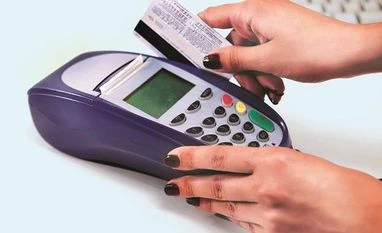
Representative Image
Advait Rao Palepu Mumbai
Last Updated : Nov 12 2018 | 5:37 AM IST
Domestic payment systems are gaining traction in the retail space over their global competitors like Mastercard, Visa and American Express. The share of the value of UPI (Unified Payments Interface) and RuPay transactions as against the value of debit and credit cards transactions at retail outlets has risen to 65.2 per cent at the end of August 2018.

While UPI is a payments interface which enables B2C, B2B and C2C transactions to make direct bank transfers, the RuPay card scheme was developed by the National Payments Corporation of India (NPCI) to compete with global giants.

On the second anniversary of demonetisation, wherein the government invalidated 86 per cent of the currency in circulation, Finance Minister Arun Jaitley in a social media post said: "Today, Visa and Mastercard are losing market share in India to indigenously developed payment system of UPI and RuPay card whose share has reached 65 per cent of the payments done through debit and credit cards."

UPI was introduced in August 2016, a few months before demonetisation, and transactions through the seamless interface have grown substantially from Rs 1.66 billion in January 2017 to Rs 750 billion at the end of October 2018.

India’s payments market is worth a little below $200 billion, as compared to China's $27-trillion market.  Despite the dominance of cash, which accounts for around 70 per cent of total transactions by value, the efforts of the government to promote electronic payment technologies is gaining favour among consumers.


A Business Standard analysis for the first eight months of CY18 shows that the value of RuPay and UPI transactions constitute 65.2 per cent of all transactions done through debit and credit cards, in value terms, across retail outlets by the end of August.

In terms of volume, UPI and RuPay transactions constituted 78.3 per cent of all transactions done through debit and credit cards at the end of August.

One reason why UPI and RuPay have gained increasing traction from customers, ignoring the effective marketing and push by government and industry, is the low transaction fees.

In the case of UPI, there is no transaction fees for each transaction, only the monthly bank charges that all customers pay to avail various services.

According to analysts, card issuing banks are charging fees as high as Rs 3 per transaction, whereas RuPay charges only Rs 0.9 per transaction.  Three important factors have to be noted here.

One is that currency in circulation is at a record high of Rs 19.6 trillion as on October 26, compared to the pre-demonetisation level of Rs 17.9 trillion as of November 4, 2016. This means that cash in circulation is higher today compared to two years ago.

The second factor is that the analysis above only accounts for debit and credit card transactions that took place at point-of-sale (POS) systems, while the data for RuPay cards includes POS and e-commerce transactions. Cards are also used at automated teller machines (ATMs), especially debit cards.

The third important aspect to note is that while the data for UPI transactions is available till October 2018, the Reserve Bank of India's electronic payments data is only available till the end of August 2018. Also, data for RuPay transactions from the NPCI website for January and February of this year, is unavailable.

Business Standard requested the data from NPCI's spokesperson, but did not receive it at the time of publication.  In comparative terms, given the missing data, the share of UPI and RuPay transactions, in value terms, stood at 36 per cent of all debit and credit card transactions in March 2018. In volume terms, the share of UPI and RuPay transactions stood at 56.7 per cent in the same month.

On the other hand, if all debit and credit card transactions, including at ATMs, were taken into account, the share of UPI and RuPay transactions, in value terms, would stand at 17 per cent at the end of August, and the share in the number of UPI and RuPay transactions would stand at 30 per cent of all card transactions.


One subscription. Two world-class reads.

Already subscribed? Log in

Subscribe to read the full story →
*Subscribe to Business Standard digital and get complimentary access to The New York Times

Smart Quarterly

₹900

3 Months

₹300/Month

SAVE 25%

Smart Essential

₹2,700

1 Year

₹225/Month

SAVE 46%
*Complimentary New York Times access for the 2nd year will be given after 12 months

Super Saver

₹3,900

2 Years

₹162/Month

Subscribe

Renews automatically, cancel anytime

Here’s what’s included in our digital subscription plans

Exclusive premium stories online

  • Over 30 premium stories daily, handpicked by our editors

Complimentary Access to The New York Times

  • News, Games, Cooking, Audio, Wirecutter & The Athletic

Business Standard Epaper

  • Digital replica of our daily newspaper — with options to read, save, and share

Curated Newsletters

  • Insights on markets, finance, politics, tech, and more delivered to your inbox

Market Analysis & Investment Insights

  • In-depth market analysis & insights with access to The Smart Investor

Archives

  • Repository of articles and publications dating back to 1997

Ad-free Reading

  • Uninterrupted reading experience with no advertisements

Seamless Access Across All Devices

  • Access Business Standard across devices — mobile, tablet, or PC, via web or app

Next Story



