
SC directs Centre, RBI to produce records relating to 2016 demonetisation
The top court directed the parties to file written submissions by December 10
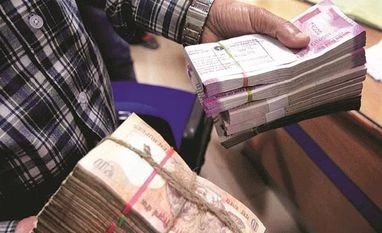 "SC directs Centre, RBI to produce records relating to 2016 demonetisation")
WebinarsNew
Deep DiveNew
Explore Business Standard
The top court directed the parties to file written submissions by December 10
The Supreme Court on Wednesday directed the Centre and the Reserve Bank of India (RBI) to put on record relevant records relating to the government's 2016 decision to demonetise currency notes of Rs 1000 and Rs 500 denomination for its perusal.
Reserving its verdict on a batch of pleas challenging the Centre's 2016 decision, a five-judge constitution bench headed by Justice S A Nazeer heard the submissions from Attorney General R Venkataramani, RBI's counsel, and the petitioners' lawyers, including senior advocates P Chidambaram and Shyam Divan.
The top court directed the parties to file written submissions by December 10.
"Heard. Judgement reserved. Learned counsels of the Union of India and Reserve Bank of India are directed to produce the relevant records," the bench, also comprising Justices B R Gavai, A S Bopanna, V Ramasubramanian, and B V Nagarathna, said.
The AG submitted before the bench that he will submit relevant records in a sealed cover.
The top court was hearing a batch of 58 petitions challenging the demonetisation announced by the Centre on November 8, 2016.
The apex court had on Tuesday said that limited scope of a judicial review in economic policy matters does not mean that the court will fold its hands and sit back, observing that the manner in which a decision is taken by the government can always be examined.
Calling the demonetisation of Rs 500 and Rs 1000 currency notes deeply flawed, Chidambaram had argued that the Union government cannot on its own initiate any proposal relating to legal tender which can only be done on the recommendation of the RBI's central board.
Resisting the apex court's attempt to revisit the 2016 demonetisation exercise, the government had said the court cannot decide a matter when no tangible relief can be granted by way of "putting the clock back" and "unscrambling a scrambled egg."
The RBI had earlier admitted in its submission that there were "temporary hardships" and that they too are an integral part of the nation-building process, but there was a mechanism by which problems that arose were solved.
The Centre recently told the top court in an affidavit that the demonetisation exercise was a "well-considered" decision and part of a larger strategy to combat the menace of fake money, terror financing, black money, and tax evasion.
Defending the exercise, the Centre had told the apex court that the step was taken after extensive consultations with the RBI and that advance preparations were made before the note ban was enforced.
(Only the headline and picture of this report may have been reworked by the Business Standard staff; the rest of the content is auto-generated from a syndicated feed.)
First Published: Dec 07 2022 | 2:18 PM IST


 Connect with us on WhatsApp