
SC to hear plea challenging constitutional validity of Article 370 in April
The bench then posted the matter for further hearing in the first week of April 2019
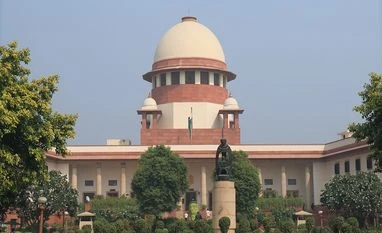 "SC to hear plea challenging constitutional validity of Article 370 in April")
WebinarsNew
Deep DiveNew
Explore Business Standard
The bench then posted the matter for further hearing in the first week of April 2019
The Supreme Court on Friday said it will hear in April a plea challenging the validity of Article 370 of the Constitution, which gives special status to Jammu and Kashmir, following a request by the state and the Centre.
A bench of Justices D Y Chandrachud and M R Shah said it will hear the matter in the first week of April 2019 after Attorney General K K Venugopal, appearing for the Centre, sought adjournment on the ground that the current situation is very sensitive.
"The political situation in the state is such that the matter should not be heard at this time," he said.
Senior advocate Rakesh Dwivedi and advocate Shoeb Alam, appearing for Jammu and Kashmir said that a letter has been circulated seeking adjournment due to the ongoing nine-phase Panchayat polls in the state.
To this, the bench said that it can tag the matter along with a batch of pending petitions challenging Article 35A of the Constitution, under which special rights and privileges are granted to the "permanent residents" of the state.
The suggestion of the bench was opposed by the counsels for the state saying that the two issues are different entirely and the plea should not be tagged along with Article 35A pending petitions.
The bench then posted the matter for further hearing in the first week of April 2019.
On April 3, the apex court had said that Article 370 of the Constitution is not a temporary provision.
The top court had said that in its earlier verdict of 2017 in the SARFESI case, it has been already held that Article 370 was "not a temporary provision".
"The issue concerned is covered by the judgement of this court in the 2017 SARFAESI matter, where we have held that despite the headnote of Article 370, it is not a temporary provision," the court had said.
The court was hearing an appeal filed by petitioner Kumari Vijayalakshmi Jha, against the Delhi High Court's April 11, 2017 order dismissing the plea seeking a declaration that Article 370 is temporary in nature.
The petitioner had claimed before the high court that Article 370 was a temporary provision that had lapsed with the dissolution of the Constituent Assembly in 1957.
The petition had said that the continuance of the temporary provision of Article 370 even after the dissolution of Constituent Assembly of J&K, and that of J&K Constitution which has never got the assent of the President of India or Parliament or the government of India, "amounts to fraud on the basic structure of our Constitution".
First Published: Nov 16 2018 | 6:05 PM IST


 Connect with us on WhatsApp