The Supreme Court today sought to disapprove Government's stand that CBI needs its permission to question senior officials in the Coalgate case.
The apex court questioned the Government for bringing into operation Section 6A of the Delhi Special Police Establishment (DSPE) Act which requires such approval of Government to proceed against senior bureaucrats in the case which is monitored by it.
A bench headed by Justice R M Lodha directed the CBI that DIG rank officer Ravi Kant Mishra, who was recalled to the agency on its order, will head the team probing the allocation of coal blocks during 2006-09 while other two DIGs -- Amit Kumar and B Murgusen -- will look the allocation done from 1995 to 2005 and those made under government dispensation respectively.
While allowing the CBI's plea to modify the May 8 order for expanding the probe team from 33 to 36 members, the bench also permitted it to remove tainted SP Vivek Dutt from the investigations of the case.
The agency told the court there was impediment when it has to interrogate senior officers in the rank of Joint Secretary as it has to follow the route of section 6A.
"On principle of law when there is a court directed and monitored investigation as in this case, can at all Sec 6A be allowed to operate. Section 6A operates in ordinary course of investigation when CBI has to seek Government approval. But in sub-judice matter, the court is looking into the aspect of probe. Ordinary in such matters which are looked by the court, the permission must and should (to interrogate) follow as a natural course," the bench said.
However, Attorney General G E Vahanvati said the process under Sec 6A cannot be exercised arbitrarily and reasons must be given for rejection, which is open to judicial review.
At this point, the bench, also comprising justices Madan B Lokur and Kurien Joseph, noted that the Government had first refused permission to CBI to question former coal secretary H C Gupta and later, on May 23 gave the nod.
"Why if that was the case, there was hesitation at first on approval for interrogatiion of former Secretary, Coal. Why at all this thing should happen. Therefore, we are on principle," the bench said, adding, "Government cannot arbitrarily refuse permission to investigate senior officials".
The AG said he was not aware "why it was not granted (permission) at first instance, but it was corrected later".

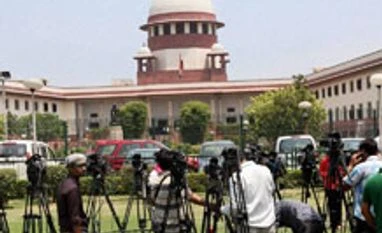 "Seeking govt permission to quiz officers in coalgate irks SC")


 Connect with us on WhatsApp