
SpiceJet skidding incident disrupts schedules, raises safety concerns
While no one was hurt, an ineffective safety area could have resulted in a major disaster, AAI tells aviation ministry
 "SpiceJet skidding incident disrupts schedules, raises safety concerns")
premium
WebinarsNew
Deep DiveNew
Explore Business Standard
While no one was hurt, an ineffective safety area could have resulted in a major disaster, AAI tells aviation ministry
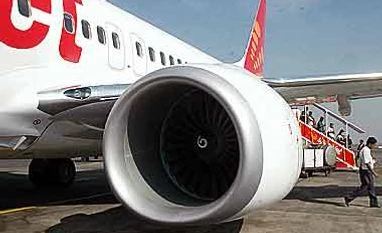
The skidding of a SpiceJet Boeing 737 plane at Mumbai on Tuesday night disrupted flight operations and raised safety concerns at the airport.
Fifty-one flights were diverted and over 150 cancelled through the day following the closure of the main runway. Fluctuating winds and poor visibility compounded the problem. No one was injured in the incident, but it brought to fore safety issues at the country's second busiest airport.
Mumbai airport has two intersecting runways (09/27 and 14/32) and aircraft land and take off from all four directions. International Civil Aviation Organisation recommends provision of a runway end safety area (RESA) at the end of each strip, which helps reduce the risk of aircraft damage in case of an excursion. For that reason the safety area is built using materials which arrest aircraft speed and is of a different grade than runway surface.
However, one end of Mumbai's main runway lacks a separate safety area (RESA). In 2009 a RESA was carved out by reducing the main runway length but its surface is of same grade as the runway.
In a letter to the civil aviation ministry on Wednesday, S Mangala, Deputy General Manager (Aviation Safety), Airport Authority of India, said the presence of non-frangible jet blast shield and lack of proper RESA at the end of runway 09 could result in a serious accident.
Fortunately the concerned SpiceJet aircraft landed from the opposite side of main runway (27) and came to halt in the safety area 12 metre from the main runway.
Mumbai International Airport Limited did not respond to a query on the issue, but an airport executive said that runway and airside area have been built in accordance with ICAO and Directorate General of Civil Aviation norms.
The cause of the incident is still under investigation and aircraft digital flight data recorder will be analysed to ascertain the reasons. Poor braking and aquaplaning could be possible causes. Aquaplaning occurs when a thin film of water separates runway surface from aircraft tyres and makes braking action ineffective. In a wet runway condition the length required for stoppage of an aircraft are higher and pilots need to select the right brake strength and use thrust reverser in time to slow down the plane.
Meanwhile efforts to remove the SpiceJet plane from the mud outside the runway continued till late evening, the recovery work hampered by rain. Each airport has a disabled aircraft recovery plan and Air India is the sole custodian of aircraft recovery kit in India as a part of International Air Transport Association's technical programme.
The SpiceJet Boeing 737, piloted by an expatriate commander, was carrying 183 passengers from Varanasi. The incident took place at 10 p.m on Tuesday. The skidding and the resultant runway closure sent flight schedules haywire at Mumbai with all inbound flights being diverted to Ahmedabad, Vadodara, Nagpur, Bengaluru, Hyderabad and Delhi. Airline executives in Mumbai found hard to find accommodation for passengers as scores of flights were cancelled.
Airline executives scrambled to maintain schedules as crew and planes required for operations were stuck in other airport. In some instances crew travelling as passengers to Mumbai to operate flight from the city too were stranded upon diversion of their aircraft.
Already subscribed? Log in
Subscribe to read the full story →

3 Months
₹300/Month
1 Year
₹225/Month
2 Years
₹162/Month
Renews automatically, cancel anytime

Premium stories handpicked daily by our editors


News, Games, Cooking, Audio, Wirecutter & The Athletic
Digital replica of our daily newspaper — with options to read, save, and share


Insights on markets, finance, politics, tech, and more delivered to your inbox
In-depth market analysis & insights with access to The Smart Investor


Repository of articles and publications dating back to 1997
Uninterrupted reading experience with no advertisements


Access Business Standard across devices — mobile, tablet, or PC, via web or app
First Published: Sep 21 2017 | 12:33 AM IST


 Connect with us on WhatsApp