Covid-19: 8% super-spreaders account for 60% new infections, says study

The findings are part of a survey conducted by the Center For Disease Dynamics, Economics & Policy (CDDEP) along with governments of Tamil Nadu and Andhra Pradesh
coronavirus
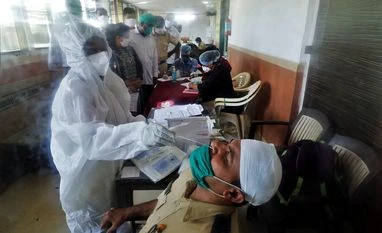
A healthcare worker wearing personal protective equipment(PPE) collects a nasal sample from a policeman, in Mumbai
Ruchika ChitravanshiSohini Das New Delhi/Mumbai
3 min read Last Updated : Oct 02 2020 | 4:20 AM IST
One of the biggest epidemiological surveys conducted in Tamil Nadu and Andhra Pradesh has found that 8 per cent of individuals with Covid-19 infection accounted for 60 per cent of new infections; and 70 per cent of those who caught the virus did not infect any of their contacts. The study suggests that the spread of the pandemic in India, the second most affected country, may have been triggered by super-spreaders.

The findings are part of a survey conducted by the Center For Disease Dynamics, Economics & Policy (CDDEP) along with governments of Tamil Nadu and Andhra Pradesh to study the disease transmission patterns in 575,071 individuals exposed to 84,965 confirmed cases of Covid-19. 

A key finding of the survey is that not all infected individuals transmit Covid-19: “A prospective follow-up testing of exposed contacts revealed that 70 per cent of infected individuals did not infect any of their contacts.”

The study, based on data collected by tens of thousands of contact tracers in the two states, claims to be the largest and most comprehensive analysis of Covid-19 epidemiology to date.


The CDDEP study has found high prevalence of coronavirus infection among children who were contacts of cases around their own age. The patterns of enhanced transmission risk in similar-age pairs were strongest among children ages 0-14 and among adults aged above 65. 

The study raises the question whether it remains crucial to establish if the role of children in transmission is underestimated in studies using case-based surveillance to identify index infections. Case based surveillance means collecting patient-level data to measure incidence, progression and outcome of the disease. “School closures and other non-pharmaceutical interventions during the study period may have contributed to reductions in contact among children.”

Also, the study has found that the risk of transmission from the first identified case to a close contact ranges from 2.6 per cent in the community to 9 per cent in the household and does not differ significantly with respect to the age of the index case. 

In terms of the case-fatality ratios — proportion of cases that died — there is a decreasing trend over the course of the epidemic, as medical know-how about the virus and treatment improved. The survey said that the individuals who tested positive in July were 26 per cent less likely to die than those tested in March and April. Those who tested positive in May and June were 13 per cent less likely to die than those tested in March and April. 

The study found that a substantial proportion of patients in Tamil Nadu and Andhra Pradesh are diagnosed late in their disease. Half of the cases ascertained before death in Tamil Nadu and Andhra Pradesh succumbed within six days of testing. The World Health Organization estimated time to death following onset of symptoms could range from two to eight weeks based on data from China.   


One subscription. Two world-class reads.

Already subscribed? Log in

Subscribe to read the full story →
*Subscribe to Business Standard digital and get complimentary access to The New York Times

Smart Quarterly

₹900

3 Months

₹300/Month

SAVE 25%

Smart Essential

₹2,700

1 Year

₹225/Month

SAVE 46%
*Complimentary New York Times access for the 2nd year will be given after 12 months

Super Saver

₹3,900

2 Years

₹162/Month

Subscribe

Renews automatically, cancel anytime

Here’s what’s included in our digital subscription plans

Exclusive premium stories online

  • Over 30 premium stories daily, handpicked by our editors

Complimentary Access to The New York Times

  • News, Games, Cooking, Audio, Wirecutter & The Athletic

Business Standard Epaper

  • Digital replica of our daily newspaper — with options to read, save, and share

Curated Newsletters

  • Insights on markets, finance, politics, tech, and more delivered to your inbox

Market Analysis & Investment Insights

  • In-depth market analysis & insights with access to The Smart Investor

Archives

  • Repository of articles and publications dating back to 1997

Ad-free Reading

  • Uninterrupted reading experience with no advertisements

Seamless Access Across All Devices

  • Access Business Standard across devices — mobile, tablet, or PC, via web or app

Topics :CoronavirusSuper spreader

Next Story



