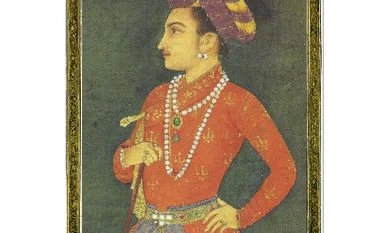
The sibling rivalry between the two Mughal princes is both legendary and mythic. Legendary because many scholars and historians believe that had Dara Shikoh ascended to the throne as his father intended, India’s history would have been shaped very differently. And, mythic because the almost simplistic manner in which Aurangzeb is seen as a villain and Dara Shikoh as the victim of his own yielding nature has moulded historical narratives and common perception. But this simplistic dichotomy has only propelled more interest in the figure of Dara Shikoh, especially among historians, students and cultural organisations. Last month, the Indian Council for Cultural Relations (ICCR) held a symposium dedicated to Dara Shikoh, his Sufi legacy, and the eternal question of “what if”.
“India would have had a constitutional monarchy had Dara Shikoh become emperor,” says Lokesh Chandra, president of ICCR, with an air of certainty. “He was a strong believer in the peaceful co-existence of various cultures. Had he not lost the Battle of Samugarh (1658), the Mughal kingdom and India would have had a more tolerant Islam.” This, he says, would have eventually not been attractive to the British empire, because Queen Victoria would not have wanted a colony that equalled her in stature and would, in turn, not be subservient to the crown.
Where Akbar tried to create a parallel religion, Din-i-Ilahi, which incorporated the best principles of Hinduism, Christianity, Islam and Sikhism, Dara Shikoh translated many of the Upanishads and Vedas from Sanskrit to Persian. “In fact, it was Dara Shikoh’s translation that eventually helped Anquetil du Perron, the French Indologist, to translate 50 Upanishads into French. This, in turn, helped formulate the thought behind structuralism, which greatly influenced European thought,” says Chandra, eyes gleaming with the glee that a grandparent might have while narrating a story to young children.
But this gleam dims a little when the mention of religion comes up. “Dara Shikoh should be revered for his ideas and concepts. The moment you bring in any religion into the question, the argument becomes more complex,” he says.
The question Chandra tries to avoid is whether Dara Shikoh was as revered among pious Muslims as Aurangzeb. For history suggests that the two brothers were starkly different in their approach to Islam: while Dara Shikoh believed in a more “open” and accepting religious identity, Aurangzeb is believed to have followed Islam by the book.
“Only a fringe minority of Islamic hardliners do not recognise Dara Shikoh’s work and legacy. He was otherwise quite popular among Hindus and Muslims,” says Firoze Ahmed Bakht, grand-nephew of Maulana Abul Kalam Azad. Dara Shikoh thus stands as the beacon of Hindu-Muslim unity, an emperor who many believe could have even averted Partition. This thought is shared by thinkers across the border, too. Shahid Nadeem, a Pakistani playwright, discusses this trope in his play Dara. “The ‘what if’ question has a mixed bag of answers. But I do believe there would have been more peace had he ascended,” says Bakht.
The eventual fallout of this was the Battle of Samugarh, fought on May 29, 1658, which Aurangzeb won against Dara Shikoh. “Dara was the pampered prince, who lacked any battle experience.” And yet, the belief that Dara Shikoh would have been a better ruler seems to keep cropping up. “You see, Dara Shikoh would have ensured that Islam remained open and adapted itself to changing times,” says Chandra in a rare reference to religion over purely liberal “concepts”.
Some historians have also attempted to make the good-bad binary between the two brothers less simplistic. Audrey Truschke, assistant professor at the Department of History in Rutgers University, Newark, tries to unshackle Aurangzeb from the chains of villainy in her book, Aurangzeb: The Man and the Myth. She cites several examples of his policies to counter the argument that he was anti-Hindu. “Over the centuries, many commentators have spread the myth of the evil, bigoted Aurangzeb on the basis of shockingly thin evidence,” she writes in her book. This analysis of Aurangzeb is particularly important because it moots the “what if” question and adds some dimension to the Dara Shikoh’s legacy. “Historically, this image of Dara Shikoh is dubious, to put it lightly. Dara’s religious interests were not quite as inclusive and ecumenical as many believe; he alienated some Muslim communities, for instance, and his interest in Hinduism stemmed, in large part, from a desire to show that Hindu texts expounded upon Muslim religious ideas. Dara was also an abysmal military leader, which would likely have made him an ineffective emperor,” she says over email.
For students of Ambedkar University in New Delhi, the questions stem from a basic curiosity about a structure on their campus — the Dara Shikoh Library. A dilapidated building with a colonial façade, this building is believed to have been built by Dara Shikoh as a place of residence. “Since he had literary inclinations, this building was stocked with books and hence came to be known as a library,” says Kumar Unnayan, research assistant at the Centre for Community Knowledge at Ambedkar University and a former student. Unnayan says that it is believed that most books and artefacts were destroyed in the 1857 revolt. It was this curiosity that led the university to organise the first Dara Shikoh festival in 2015, which was to focus on Dara Shikoh’s political and literary contributions. “But no one knows what’s inside the building. The guards tell us that there’s nothing really to see.” But, adds Unnayan, students are equally interested in the building behind the colonial façade, parts of which has retained elements of Mughal architecture. “It’s become a place for students to relax since there is a lawn attached to the library. A bunch of monkey tend to terrorise the bravest of souls trying to unwind with coffee or a cold drink,” says Sanchi Paul Budhiraja, a former student of the university.
Unlike the crippling loss at Samugarh that eventually led to his death, Dara Shikoh may finally be getting his due in history, either while sipping a cool drink with young students or trumpeting his victory on Dara Shikoh Road.
One subscription. Two world-class reads.
Already subscribed? Log in
Subscribe to read the full story →
Smart Quarterly
₹900
3 Months
₹300/Month
Smart Essential
₹2,700
1 Year
₹225/Month
Super Saver
₹3,900
2 Years
₹162/Month
Renews automatically, cancel anytime
Here’s what’s included in our digital subscription plans
Exclusive premium stories online
Over 30 premium stories daily, handpicked by our editors


Complimentary Access to The New York Times
News, Games, Cooking, Audio, Wirecutter & The Athletic
Business Standard Epaper
Digital replica of our daily newspaper — with options to read, save, and share


Curated Newsletters
Insights on markets, finance, politics, tech, and more delivered to your inbox
Market Analysis & Investment Insights
In-depth market analysis & insights with access to The Smart Investor


Archives
Repository of articles and publications dating back to 1997
Ad-free Reading
Uninterrupted reading experience with no advertisements


Seamless Access Across All Devices
Access Business Standard across devices — mobile, tablet, or PC, via web or app
)