The Kaveri delta is home to ancient and still thriving craft traditions

A trip to the Kaveri delta is a revelation. An assurance that the world of traditional Indian craft traditions is alive and well, writes Shonali Madapa
The intricate and ancient art of bronze-casting in Swamimalai
Shonali Madapa
4 min read Last Updated : Nov 02 2019 | 2:56 AM IST
Travelling in the Kaveri Delta region offers insights into the remains of the unique Chola kingdom that existed from the 3rd century CE till roughly the 13th CE in Tamil Nadu. Ancient temples, both modest and magnificent, dot the towns between paddy fields fed by the rushing waters of the Kaveri. 

Stone sluices and the Grand Anicut (canal) built by the Cholas are testimony to their engineering skills. The network of canals has contributed to the region earning the moniker of “rice bowl of South India”. Traversing the waterways, a visitor receives a distinct sense of rich history, which present-day inhabitants of the land perpetuate as a way of life.

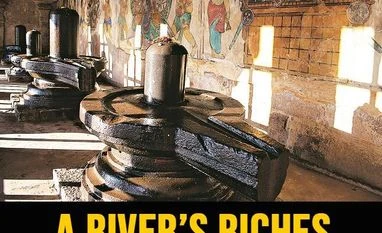
Murals and lingas in the corridors encircling the Brihadisvara temple in Thanjavur
Amidst the shady coconut groves of the sleepy village of Swamimalai near Kumbakonam in Thanjavur District, the ancient craft of bronze casting flourishes. Set back from the roads are several workshops of a special community of master craftsmen known as sthapatis. They cast a multitude of idols of Hindu gods and goddesses, along with smaller figurines of animals and birds. Rajaraja Chola the Great (985 CE-1018 CE) commissioned the ancestors of these craftsmen to sculpt stone idols and cast bronze icons for the Brihadisvara temple in Thanjavur. When their task was complete, they moved to Swamimalai and settled there.

A thavil maker at work
Using the methods set out in the ancient Shilpa Shastras, the sthapatis follow the “lost wax” bronze casting method. There are four main stages in the production: making a solid wax model with intricate details; preparing a clay mould for the model; casting the metal in the clay mould; and finally engraving and polishing the icon. The ancient palm leaf scale known as odiolai in Tamil is still used to determine the proportions of the icon. A single tala forms the basic unit of measurement and equals the length of the face from head to chin. It is fascinating to watch a sthapati fold the mid-section of a thin palm leaf into nine parts known as the navatalas, which correspond to the total length of the anthropomorphic form of the sculpted deity. 

A thavil
The special, fine alluvial clay found in the riverbed of the Kaveri near Swamimalai is ideal for making clay moulds. This is one of the reasons why Swamimalai continues to be an important centre for bronze casting.

A trip to Swamimalai is incomplete without a visit to the Brihadisvara temple in Thanjavur. The best time to visit is at 6am before the crowds pour in. The towering temple tower, or vimana, is an architectural wonder. The enormous Shiva linga, the main icon of the temple, was installed before the temple tower came up around it. Interlocking granite blocks devoid of masonry form the intricately patterned towers and walls. The pillared corridors that surround the temple feature beautifully painted wall murals, their vibrant colours intact. Numerous stone pillars with Tamil inscriptions dating back to 11 CE add to the extraordinary beauty of the temple. No wonder it is known as “Periya Kovil” in Tamil — the Great Temple.

Thavil: A musician uses the instrument
Locals pray here with as much reverence as their ancestors must have. It is deeply moving to see people pray silently, oblivious to a temple waking up to its everyday chaos. 

A short distance away is the town of Panruti in Cuddalore district. This also affords a leap into the world of thavil making. The thavil is a type of drum used for temple activities and special processions in Tamil Nadu. Early thavils had a central frame made of clay. This is now replaced with mature jackwood. The belief is that a tree grown near a sacred space produces a better quality of sound. Unique to the thavil is the fact that it is beaten with a stick on one side and the hand on the other. The side beaten by hand is covered with buffalo skin, while goat skin covers the side beaten with a stick. This gives the instrument its unique tonal qualities. 

Lush green paddy fields of the Kaveri delta
A trip to the Kaveri delta is a revelation. An assurance that the world of traditional Indian craft traditions is alive and well, that ancient cultural traditions continue despite the advent of globalisation and rapid technological change.

Boys enjoy the waters of the Grand Anicut canal

One subscription. Two world-class reads.

Already subscribed? Log in

Subscribe to read the full story →
*Subscribe to Business Standard digital and get complimentary access to The New York Times

Smart Quarterly

₹900

3 Months

₹300/Month

SAVE 25%

Smart Essential

₹2,700

1 Year

₹225/Month

SAVE 46%
*Complimentary New York Times access for the 2nd year will be given after 12 months

Super Saver

₹3,900

2 Years

₹162/Month

Subscribe

Renews automatically, cancel anytime

Here’s what’s included in our digital subscription plans

Exclusive premium stories online

  • Over 30 premium stories daily, handpicked by our editors

Complimentary Access to The New York Times

  • News, Games, Cooking, Audio, Wirecutter & The Athletic

Business Standard Epaper

  • Digital replica of our daily newspaper — with options to read, save, and share

Curated Newsletters

  • Insights on markets, finance, politics, tech, and more delivered to your inbox

Market Analysis & Investment Insights

  • In-depth market analysis & insights with access to The Smart Investor

Archives

  • Repository of articles and publications dating back to 1997

Ad-free Reading

  • Uninterrupted reading experience with no advertisements

Seamless Access Across All Devices

  • Access Business Standard across devices — mobile, tablet, or PC, via web or app

Topics :DeltaHandicrafts

Next Story



