If strong measures are taken, then a third wave of Covid-19 may not happen in "all parts of the country or anywhere at all", Principal Scientific Advisor K Vijay Raghavan said on Friday, two days after he sounded the alarm that a third wave was inevitable. On Wednesday, Raghavan had said, "We should prepare for the new waves."
He said new opportunities for infections could arise if people became complacent and did not protect themselves. “The frequency and sizes of such ups and downs must be reduced. This is in our hands,” Raghavan said.
He also said it would be useful to talk about location, timing and intensity of infections, instead of waves and their number, even though the latter was in common usage. “While the virus runs out of opportunities, it is not eliminated. Therefore, if new opportunities arise, so will cases...It will depend on how effectively the guidance is implemented."
Raghavan said until the coverage of vaccination was maximum, each preventive step could reduce the rise and fall in cases.
The government has said more than 9 million Covid vaccine doses were still available with the states to be administered of the total supply of more than 170 million doses. Another million doses will be delivered to the states in the next three days.
V K Paul, member (health) of the NITI Aayog, said the development of a single dose Sputnik vaccine sounded promising and that India would have to study the immunogenicity data for the same. “We will examine the claim. Let more information come,” he said.
While there is a plateauing or declining trend in cases across 15 states, the government is concerned about increasing infections in 18 states, including the southern and the northeastern states. “We take a seven-day rolling average to study the increase or decrease of cases in the state...We cannot become complacent and have to keep a watch on cases,” said Arti Ahuja, additional secretary, health ministry.
The health ministry has reviewed the Covid-19 situation and management with 8 states — Assam, Odisha, Jharkhand, Bihar, West Bengal, Uttar Pradesh, Uttarakhand, and Himachal Pradesh.
The ministry said out of the 162 pressure swing adsorption (PSA) plants for oxygen sanctioned, 71 had been installed. A total of 1,594 PSA plants are being established across the country.
Raghavan and Paul clarified that the coronavirus was not water-borne after concerns were raised over dead bodies found floating in a Yamuna river in Uttar Pradesh’s Hamirpur.
CoWIN updated
With many beneficiaries getting notified for vaccination despite not being able to get the shot, the government has introduced a new security code feature in the CoWIN platform. “Upon examination, it (the error) has been found to occur largely on account of the Vaccinator wrongly marking the citizen as vaccinated,” the health ministry said.
Before administering the vaccine dose, the vaccinator will ask the beneficiary for a four-digit code and then enter the same in the CoWIN system to correctly record the vaccination status. The new feature will be applicable only for those who have done an online booking for a vaccination slot from May 8.

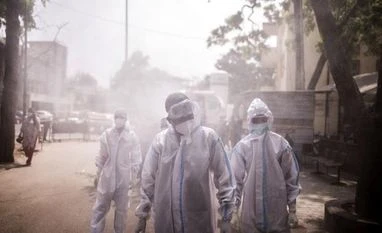 "Third Covid-19 wave may not happen if strong steps taken, says govt")












 Connect with us on WhatsApp