Waiving the World Trade Organization (WTO) rules on Trade-Related Aspects of Intellectual Property Rights (TRIPS) alone would not lead to increased access to vaccines across the globe, feel vaccine makers and legal experts.
Such a temporary lifting of intellectual property rights (IPR) to ensure higher production of vaccines during the pandemic, which India and South Africa have been pushing for, may not have an immediate implication for the local vaccine industry either, the experts felt.
Vaccine industry insiders feel IPR is not the only or main obstacle to ensure higher access of Covid-19 vaccine – it is more a matter of having the right health infrastructure to administer high volumes of vaccines to a population, money or resources, and trained manpower to manufacture the vaccine.
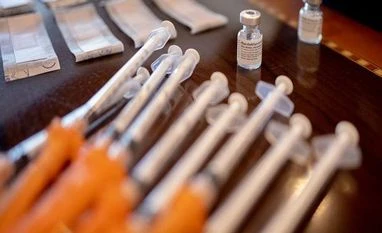
Mahima Datla, managing director, Biological E (BE), the makers of Corbevax, a protein subunit vaccine for Covid-19, said that Baylor College of Medicine in Houston, Texas (with which BE collaborated to develop the vaccine) has already waived any IP restrictions because they wanted to make sure that this vaccine is as accessible as possible.
Datla continued: “We come across a lot of discussion on how critical IP is, and how its waiver is important, but I don’t believe that IP is the only obstacle. The more serious obstacle is having infrastructure to make the vaccine, trained manpower, etc.”
She pointed out that while Moderna has waived their IP related to the mRNA technology, it does not mean that 15 different countries or 15 different manufacturers will start making it tomorrow. Datla stressed on countries having health infrastructure to administer millions of doses, something that India has done well.
BE is not in discussion at the moment with any WTO country for IP waiver.
Moreover, vaccine makers feel that unless the innovator company comes forward to handhold another manufacturer, the process of making a vaccine is not that simple even if the IP restrictions were to be waived.
“Even if the technology were available immediately, it would take nine months to a year to develop the processes and commercialise the same. Vaccines are biological products using viruses, and manufacturing it involves an extremely complex process. Any change in that process can result in failure to get the right vaccine candidate,” said a senior executive of a vaccine firm.
Sharvil Patel, managing director of Zydus Lifesciences, explained, “Everyone has different cell lines, proprietary adjuvants, may be proprietary equipment, different technologies. IPs are very broad. One does not really know the exact process of manufacturing.”
Patel, thus, felt that waiving the IP would mean very little in terms of giving access unless the innovator company is willing to partner and help other companies do the technology transfer and develop processes.
Vaccine supplies are no longer the obstacle to ensure more equitable access to vaccines across the globe, Datla said.
In fact, Soumya Swaminathan, chief scientist, WHO, recently pointed out that, “We are over the phase of supply shortage that we saw for most parts of 2021. Now we have enough stability on supplies that can satisfy demands.”
Swaminathan explained that the challenge now lies elsewhere. “The challenge now is that many countries have not been able to mount the kind of successful vaccination programmes that India has been able to. Many countries need a lot of support on the ground in terms of technical support, work force, funding and other logistical support etc. Covax is now going to help countries to scale up to this high target of vaccinating 70 per cent of their populations,” she had said at a recent event.
Legal experts felt the patent waiver may not have any immediate implications for Indian players.
Aparna Gaur, leader, IP practice, Nishith Desai Associates, said, “The patent waiver by itself is not a green flag to launch Covid-19 vaccines. Manufacturers may need the patentee’s know-how to develop a marketable product. Regulatory approvals for manufacturing and marketing such vaccines will still be required. So even if the waiver applies to India, it may not have an immediate impact.”
Similarly, experts feel that unless stakeholders are taken in consultation, judicial scrutiny could defeat the purpose.
Ashwin Sapra, partner and head — healthcare and pharma, Cyril Amarchand Mangaldas, told Business Standard: “IP waivers would apply across the board to all IP holders. All policy decisions that affect rights of any innovators should be taken in consultation with relevant stakeholders. Due process needs to be followed otherwise such one-sided decisions can become subject to judicial scrutiny and defeat the purpose for which they have been taken.”




