Rain-hit villagers living in some rehabilitation camps in Uttarakhand's Pithoragarh district are worried about their future as they have lost their livelihoods with their cultivable land getting submerged under floodwaters.
With the monsoon ending next month, their anxieties are on the rise as they fear the administration will stop feeding them from September.
There are 1,155 villagers, living in nine relief camps in Munsiyari, Bangapani and Dharchula subdivisions of the district at present.
These areas were hit by heavy rains recently in which 21 people were killed in separate incidents of house collapse and flooding in different villages and hundreds were rendered homeless.
We have distributed a total of 2.26 crore of relief money amongst the affected and are taking care of all their daily needs till the monsoon fury lasts," Pithoragarh District Magistrate V K Jogdande said.
"The government fulfils formality of relief after providing Rs 1.19 lakh for construction of houses and Rs 20,000 per hectare for washed out lands. Even if we construct houses somehow, what about our livelihood that depended on cultivable land washed away by rivers, said Bhagat Singh, a former Gram Pradhan of Mawani village under Bangapani subdivision.
Netra Singh, a villager living in tents near Baram rehabilitation camp, said he is afraid of his future livelihood as his half an acre of cultivable land has been washed away by the floodwaters.
We used to grow rajma, pulses, potato and other marketable crops in that land and earn up to Rs 50,000 per annum, but with our entire land having been washed away by a tributary of the Gori river, we have left with no livelihood," said Netra Singh.
Durga Singh Mehra, a resident of Kultham village, said he lost his seven nalis' (a local unit of area measurement) of cultivable land in the 2013 disaster and settled in nearby Patoti village with help from the government relief money.
But, he said, that too got washed away in 2018 forcing him to settle in Sarmioli village and the house there too got washed away in July 2020.
My family lost traditional occupation of cultivating Rajma and potato supported by the rearing of sheep after our land got washed away by the river. I am now working as a labourer in Border Road Organisation since 2014, said Mehra.
SDM Bhagat Singh Phonia of Munsiyari and Bangapani subdivisions has said a total of 184 nali' (9.2 acres approx) of cultivable land has been washed away by deluged rivers and rivulets due to heavy rains and cloudbursts this year in Munsiyari subdivision alone.
The villagers where the cultivable land has been washed away are Josha (32 nali), Tanga (24 nali), Pakuli (18 nali), Gaila Pathar (13 nali), Sera Suraidhar, (26 nali), Bansbagar (14 nali), Senar Pangti (19 nali), said Phonia.
In Bangapani subdivision villages, a total of 22 nali of cultivable land has been washed away, though we have sent details of the washed away lands by rivers, at present, there is no provision to allocate washed away land to farmers, besides giving them a one-time compensation, he added.
Experts say being settled near rivers and rivulets, most of the villages in Munsiyari Dharchula and Bnagapani subdivisions are prone to land erosion too.
Due to drastic changes in Himalayan weather after 2013, more and dense rains are occurring in the region, resulting in washing away of houses, lands and deaths of villagers, said Pradeep Kumar, the state government geologist deputed in the district.
According to Kumar, out of 51 villages, he geologically surveyed in last seven years, 25 are not worth living while 23 need protective measures, two have been ordered shifting to safe places, while two others have been shifted.
The villages of Josha, Dhapa and Tanga which we surveyed geologically this year, are not worth living and should be relocated immediately, said the geologist.
According to Pithoragarh district magistrate, a total of 662 disaster-hit families in Dharchula, Munsiyari and Bangapani subdivisions in the district figure in the rehabilitation list.
These families have been shifted to safe places under provisions of 'owner-driven constructed houses' (ODCH) scheme aided by disaster funds and chief ministers' relief measures, said Pithoragarh District Magistrate Jogdande.

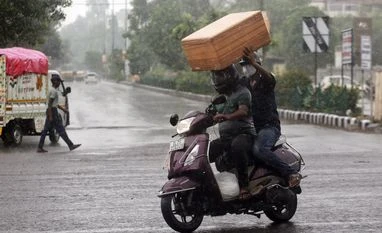 "Uttarakhand: Residents of rain-hit villages worried about livelihood")


