The government’s plan to hand over the Jinnah House in Mumbai’s Malabar Hill to the Ministry of External Affairs (MEA) has not gone down well with the Wadia family, which is fighting a legal battle in the Bombay High Court to take over the upscale property, said sources.
The Wadia family, heir to Muhammad Ali Jinnah, the first governor-general of Pakistan, plans to continue its fight in Indian courts. Jinnah’s only daughter and Nusli Wadia’s late mother, Dina Wadia, moved the high court in 2007 to regain control of the estate.
The matter came under the spotlight on Wednesday when External Affairs Minister Sushma Swaraj said the property would be converted into a venue along the lines of Hyderabad House in New Delhi to host foreign dignitaries.
“The Wadia family is taking legal opinion on whether the property can be acquired by the government when the case is still being fought in the Bombay High Court,” said a source aware of the development. The Wadia family, however, declined to comment.
The palatial Jinnah House, spread over 2.5 acres in the tony neighbourhood and worth Rs 5-6 billion, is also claimed by the government of Pakistan, which wanted to set up its Mumbai consulate on the premises. The property was leased to the British High Commission between 1948 and 1983 and was the official residence of the high commissioner. The house remained vacant until 2003, when a part of it was given to the Indian Council for Cultural Relations to be used for cultural activities. The house is now being transferred from ICCR to the MEA.
In a letter to the city-based builder and Bharatiya Janata Party (BJP) Vice-President Mangal Prabhat Lodha, Swaraj said the ministry was in the process of transferring the property in its name so that it could be developed on the lines of Hyderabad House. She said the ministry had received permission from the Prime Minister’s Office for the same.
Subramanian Swamy, BJP Member of Parliament in the Rajya Sabha, tweeted that the property should go to the Wadias. “Jinnah had married a Parsi lady. But his only daughter rejected Pakistan and opted for India. This broke Jinnah’s heart. Jinnah’s only heir is today Nusli Wadia, who lifelong has been Jan Sangh/BJP supporter. I do not know what twisted thinking of the government could deny his family the right to their ancestral Jinnah House in Mumbai,” he said.
Property lawyers said with the amendments in the Enemy Property Act, 1968, by the Modi government in 2016, the road for the government to take over such properties had become easier. “If the government of India wants to take over the property, then it would be very difficult for any other party, including the Wadias, to interfere,” said a Mumbai-based lawyer.
Lawyers said most of the immovable property of Pakistan citizens was vested with the Custodian for Enemy Property of India, which had acquired these properties after the promulgation of Enemy Property Act in 1968.
Meanwhile, Pakistan’s leading daily Dawn quoted the foreign office as saying that Pakistan would not forfeit its claim to Jinnah House.

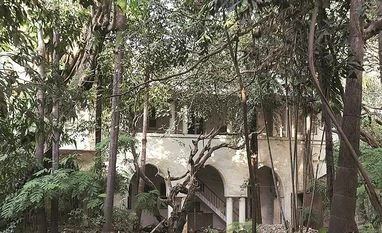 "Wadia family to continue legal battle for Jinnah House's ownership")











