We're branding all Islamic issues as anti-Women: Activist Flavia Agnes

Right now, there is so much Islamophobia and fear of 'the other', because we do not know about the traditions, customs and practices of Muslims
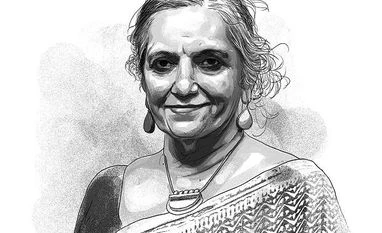
Flavia Agnes, Women's Rights Activist, Majlis Founder
Women's rights activist and Majlis founder Flavia Agnes. Illustration: Ajay Mohanty
Tish Sanghera | IndiaSpend
Last Updated : Sep 29 2018 | 7:51 PM IST
Flavia Agnes, leading women’s rights lawyer and co-founder of Majlis, a legal and cultural resource centre that campaigns for and provides legal representation to women and children, tells Tish Sanghera that reactions to the problems of Muslim women are knee-jerk and prompted from ignorance. Excerpts:

There have been negative and often extreme reactions amongst parliamentarians to news that the All India Muslim Personal Law Board (AIMPLB) intend to establish sharia courts in every district of the country. Can you explain why you believe those who are concerned about sharia courts acting as a ‘parallel legal system’ may have misunderstood how they operate?

An impression seems to have been created that this move to set up darul qazas in every district is driven by an objective to undermine the impact of the recent constitutional bench ruling in the triple talaq (Shayara Bano vs Union of India) case, which had declared triple talaq invalid last August. But this premise has no basis since darul qazas have been functioning in India for a long time.

For instance, Imarat-e-Sharia in Patna, which has a well-oiled alternate dispute resolution mechanism, was set up in 1920 and has a broad network of darul qazas across many north Indian states. At that time, there was no controversy around the setting up of this institution. Additionally, there are also darul qazas run by muftis who are not affiliated to any darul qazas. 

Misunderstanding around the machinations of Islamic law have been seen before. Do you think the AIMPLB’s plan to activate its Tafheem-e-Shariyat committee will help to improve awareness levels and even relations between opposing groups?

Yes, I am sure such initiatives will help to clear the air and give a true picture about Islam, and Muslim women’s rights. Right now, there is so much Islamophobia and fear of ‘the other’, because we do not know about the traditions, customs and practices of Muslims. Through our ignorance, we are branding everything concerning Islam as anti-women.

As many as 95 of 100 cases studied in a darul qaza in Kanpur were filed by women who wanted the dissolution of a marriage or maintenance support, in a 2017 study by the Indian Institute of Technology, Kanpur. What does this tell us about the role these organisations play amongst women in this community?

The same is true of all the darul qazas that I have visited in Mumbai, not just this one in Kanpur. I have visited around eight that are functioning and each one said more women approach them than men. A few of these stated that around 95 per cent are women.

This is because when a Muslim woman faces domestic violence she often prefers to go to a darul qaza to dissolve her marriage rather than the family court. In a darul qaza, women feel more comfortable since they are familiar with the culture, understand the language. Also darul qazas offer expeditious and cheaper options to resolve family disputes, than the civil courts.

Men approach the darul qazas if their wife has deserted them or the wife has filed a criminal case under Section 498A of the IPC (Indian Penal Code). Men do not approach a darul qaza for pronouncing talaq. 

Hypothetically speaking, if darul qazas were abolished and personal law matters brought more into the purview of the secular judiciary, what in your opinion would be the impact on communities that had traditionally looked towards alternative dispute mechanisms?

Today our judiciary is clogged and cases drag on for a very long time. So actually solving disputes through alternative dispute resolution mechanisms like Lok Adalats (People’s Courts), mediation centres etc are encouraged. Therefore, I do not think the government will abolish the darul qazas.

Even if they are abolished people can still choose various alternative fora such as the local panchayats (village councils), mediation by family elders, religious heads and local political parties etc to resolve civil disputes. For instance, even among Christians and Hindus such alternatives are available. Christians have their own church tribunals and many lower caste Hindus approach their caste panchayats or village panchayats to resolve family disputes.

The Hindu Marriage Act validates the divorces granted as per custom of the caste. So if Muslims opt for obtaining khula (divorce initiated by the wife) in a darul qaza, the husband also accepts this fora for resolving the dispute and both parties abide by the decision of the darul qazas, how can this be stopped? 

You have previously said the media too often portrays the plight of Muslim women in India inaccurately (as lacking rights) and manipulates the story to fit politically charged discourse. The recent public interest litigation is a good example of this you say. Could you explain what you mean by this?

Based on a study conducted by Bharatiya Muslim Mahila Andolan (the findings and methodology of which were challenged by legal scholars) several articles appeared in the media. A bench of the Supreme Court while denying a Hindu woman right to ancestral property, totally out of context, then made a reference that a Constitution Bench be set up to examine the lack of rights of Muslim women though this was not an issue before the court.

Shayara Bano is a victim of domestic violence just like 50 per cent of all Indian women are. She had left her matrimonial home and was residing with her parents. Remedies to her concerns (maintenance, access to her children and protection against domestic violence) were available to her under the Protection of Women from Domestic Violence Act, but perhaps no one advised her about this.

When her husband filed for Restitution of Conjugal Rights, she contacted a Supreme Court lawyer to transfer this case from Lucknow to Kashipur. As a counter blast, the husband’s lawyer sent her a talaqnama. Since a Constitution Bench was constituted, her lawyer advised her to file a writ petition and challenge the talaqnama though she herself consistently maintained that she does not wish to return to her husband due to the domestic violence. So according to me this case does not strictly fit the formula of ‘instant and arbitrary triple talaq’. But the writ petition gave her instant fame and she became known as a crusader for Muslim women. Recently I read reports that she has joined the BJP.

In the same article you also said, the media often ignores the large number of positive court judgements in favour of Muslim women in India. Can you give us an example from your own experience working with Majlis or interactions with the Muslim community?

I could mention so many since we are constantly using these cases to defend the rights of Muslim women. For instance, in the Shamim Ara case in 2002, the Supreme Court laid down the correct procedure for pronouncing talaq. Even earlier there were judgments of Justice Barul Islam of the Guwahati High Court in 1981 where the procedure for pronouncing talaq was laid down. Since 1981 to 2002, various High Courts had followed the Guwahati judgement. So the issue that arbitrary triple talaq is invalid was already settled. But these judgments were not highlighted in the media.

So every time we have approached the magistrate’s court to protect a Muslim woman under this Act, the other side have argued that a Muslim woman is not entitled to claim relief under this Act and this is simply because media had not highlighted this issue enough.

One subscription. Two world-class reads.

Already subscribed? Log in

Subscribe to read the full story →
*Subscribe to Business Standard digital and get complimentary access to The New York Times

Smart Quarterly

₹900

3 Months

₹300/Month

SAVE 25%

Smart Essential

₹2,700

1 Year

₹225/Month

SAVE 46%
*Complimentary New York Times access for the 2nd year will be given after 12 months

Super Saver

₹3,900

2 Years

₹162/Month

Subscribe

Renews automatically, cancel anytime

Here’s what’s included in our digital subscription plans

Exclusive premium stories online

  • Over 30 premium stories daily, handpicked by our editors

Complimentary Access to The New York Times

  • News, Games, Cooking, Audio, Wirecutter & The Athletic

Business Standard Epaper

  • Digital replica of our daily newspaper — with options to read, save, and share

Curated Newsletters

  • Insights on markets, finance, politics, tech, and more delivered to your inbox

Market Analysis & Investment Insights

  • In-depth market analysis & insights with access to The Smart Investor

Archives

  • Repository of articles and publications dating back to 1997

Ad-free Reading

  • Uninterrupted reading experience with no advertisements

Seamless Access Across All Devices

  • Access Business Standard across devices — mobile, tablet, or PC, via web or app

Next Story



