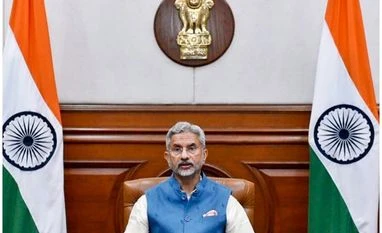
West saw military dictatorship in region as preferred partner: Jaishankar
India has a substantial inventory of Soviet and Russian-origin weapons because the Western countries opted for a military dictatorship in the region as its preferred partner, S Jaishankar said
Press Trust of India Canberra India has a substantial inventory of Soviet and Russian-origin weapons because the Western countries opted a military dictatorship in the region as its preferred partner and did not supply weapons to New Delhi for decades, External Affairs Minister S Jaishankar said on Monday, in an apparent reference to Pakistan.
During a joint press meet with his Australian counterpart Penny Wong here, Jaishankar also said that India and Russia have a long-standing relationship that has certainly served New Delhi's interests well.
"We have a substantial inventory of Soviet and Russian-origin weapons. And that inventory actually grew for a variety of reasons. You know, the merits of the weapons systems themselves, but also because for multiple decades, Western countries did not supply weapons to India, and in fact, saw a military dictatorship next to us as the preferred partner," Jaishankar said, in an apparent reference to Pakistan, which was a close ally of the US-led West during the Cold War.
Pakistan has been ruled by the Army Generals for more than half of its 73 plus years of existence.
"We all in international politics deal with what we have, we make judgments, judgments which are reflective of both our future interests as well as our current situation. And my sense is, in terms of this current conflict, like every military conflict, there are learnings from it, and I am sure my very professional colleagues in the military would be studying it very carefully, Jaishankar said.
He was asked by an Australian reporter whether India should reduce its reliance on Russian weapons systems and rethink its relationship with Russia, given what is going on in Ukraine.
Last month, Jaishankar, during a joint press conference with US Secretary of State Antony Blinken, said that India exercises a choice which it believes is in its national interest when it is offered weapons.
Russia has been a major supplier of military hardware to India. The two countries have been holding discussions on what kind of payment mechanisms can work between them in view of the Western sanctions on Moscow.
Russian Ambassador to India Denis Alipov said last month that Russia has delivered its most advanced long-range surface-to-air missile defence system S-400 to India on time despite pressure from Washington and the US-led West's sanctions.
The S-400 is known as Russia's most advanced long-range surface-to-air missile defence system. The 'Triumf' interceptor-based missile system can destroy incoming hostile aircraft, missiles and even drones at ranges of up to 400 km.
Russia had started delivery of the first regiment of the missile in December last year.
The missile system has already been deployed in such a way that it can cover parts of the border with China in the northern sector as well as the frontier with Pakistan.
In October 2018, India had signed a USD 5 billion deal with Russia to buy five units of the S-400 air defence missile systems, notwithstanding warning from the then Trump administration that going ahead with the contract may trigger US sanctions under CAATSA.
(Only the headline and picture of this report may have been reworked by the Business Standard staff; the rest of the content is auto-generated from a syndicated feed.)

 "West saw military dictatorship in region as preferred partner: Jaishankar")

