1. The Beginnning The Jaish-e-Mohammed (JeM) is a relatively new terrorist outfit when compared to other major outfits active in Jammu and Kashmir (J&K). It was launched on January 31, 2000, by Maulana Masood Azhar in Karachi after he was released from an Indian jail during the terrorists-for-hostages swap of December 31, 1999, following the hijacking of the Indian Airlines Flight IC 814 to Kandahar.
The formation of the outfit was endorsed by three religious school chiefs, Mufti Nizamuddin Shamzai of the Majlis-e-Tawan-e-Islami (MT), Maulana Mufti Rashid Ahmed of the Dar-ul Ifta-e-wal-Irshad and Maulana Sher Ali of the Sheikh-ul-Hadith Dar-ul Haqqania.
The outfit’s creation can be linked to the popularity surrounding Masood Azhar after his release from India. Azhar was the general secretary of the newly established Harkat-ul-Ansar (HuA) in 1994 and was on a 'mission' in J&K when he was arrested on February 11. When he was released, the HuA had been included in the US list of Foreign Terrorist Organisations which had compelled the outfit to rename itself as the Harkat-ul-Mujahideen (HuM). However, Azhar decided to float the new outfit JeM instead of rejoining his old outfit. He is also reported to have received assistance in founding JeM from Pakistan’s Inter-Services Intelligence (ISI), the Taliban regime then in power in Afghanistan, Osama bin Laden, and several Sunni sectarian outfits in Pakistan.
2. Objectives The Jaish-e-Mohammed is part of the Islamist terror network with its base in Pakistan and active in terrorist violence in J&K. The outfit, like other such groups in J&K, claims to using violence to force a withdrawal of Indian security forces from the state. The outfit claims that each of its offices in Pakistan serve as schools of jihad. Delivering speeches at various cities and towns in Pakistan after his release, Azhar threatened that the outfit would eliminate Indian Prime Minister Atal Bihari Vajpayee who he termed as 'Abu Jahl’ (Father of Ignorance). In its fight against India, he added that the outfit would not only "liberate" Kashmir, but also would take control of the Babri Masjid in Ayodhya, besides Amritsar and Delhi.
3. Leadership and Command Structure Azhar, the Amir (chief) of the outfit was arrested by Pakistani security forces on December 29, 2001, after pressure from India and other foreign countries following the December 13, 2001 attack on India’s parliament building. However, a three-member Review Board of Lahore High Court ordered on December 14, 2002, that Azhar be released.
There are no reports of any formal governing bodies or councils within the outfit. Unconfirmed reports indicate that the prominent office bearers of the organisation include
Maulana Masood Azhar – Amir
Maulana Qari Mansoor Ahmed – Nazim Propaganda Wing (he is a resident of Bhurewala, Punjab)
Maulana Abdul Jabbar – Nazim, Military Affairs (Former Nazim military affairs, (HuM)
Maulana Sajjad Usman – incharge, Finance (Former HuM Nazim Finance)
Shah Nawaz Khan alias Sajjid Jehadi & Gazi Baba – Chief Commander J&K (Former Supreme Commander HuM, J&K)
Maulana Mufti Mohd. Asghar – Launching Commander (Former Launching Commander of HuM)
4. Operational Strategies Most Jaish-e-Mohammed attacks have been described as fidayeen (suicide terrorist) attacks. In this mode, terrorists of the outfit storm a high security target, including security forces' bases, camps and convoys. After storming, they either fortify themselves within the target, killing as many security force personnel and civilians as possible before they are killed by retaliatory action. In other cases, they kill and injure as many as possible before attempting to escape.
5. Area of Operation The Jaish-e-Mohammed has largely confined its operations within J&K. The only recorded instance of its operations outside J&K has been the December 13, 2001, Parliament attack in New Delhi. However, several of its cadre have been arrested or killed by security forces in states other than J&K.
6. External Linkages The outfit is closely linked, through the Binoria Madrassa in Karachi, with the former Taliban regime of Afghanistan and Al Qaeda. The JeM is also reported to have links with Sunni terrorist outfits operating in Pakistan such as the Sipah-e-Sahaba
Pakistan and Lashkar-e-Jhangvi.
(Source: South Asia Terrorism Portal)

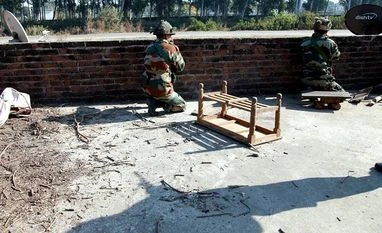 "What is Jaish-e-Mohammed? All you need to know")


 Connect with us on WhatsApp