
Why is govt running away from giving legal responsibility for MSP?: Cong
As agriculture-related bills were tabled in the Rajya Sabha, Congress on Sunday stepped up its attack on the Centre over the issue
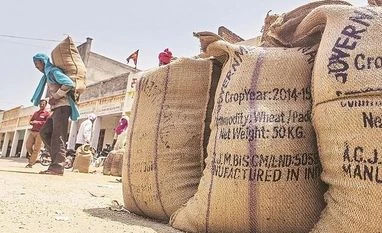 "Why is govt running away from giving legal responsibility for MSP?: Cong")
WebinarsNew
Deep DiveNew
Explore Business Standard
As agriculture-related bills were tabled in the Rajya Sabha, Congress on Sunday stepped up its attack on the Centre over the issue
As agriculture-related bills were tabled in the Rajya Sabha, the Congress on Sunday stepped up its attack on the Centre over the issue and accused it of "running away" from giving legal responsibility for the Minimum Support Price (MSP).
Days after their passage in the Lok Sabha, Agriculture Minister Narendra Singh Tomar introduced the Farmers' Produce Trade and Commerce (Promotion and Facilitation) Bill, 2020, and the Farmers (Empowerment and Protection) Agreement of Price Assurance and Farm Services Bill, 2020 in the Rajya Sabha.
Tomar said minimum price or MSP based procurement of agriculture crops from farmers will continue and is not related to the farm bills that seek to give cultivators freedom to market their produce.
Congress' chief spokesperson Randeep Surjewala said the Modi government will get the "three black bills" passed in the Rajya Sabha through whip.
"But no answer -- how will the 15.5 crore farmers' land get MSP, who will give?" Surjewala said.
"Why is the government running away from giving legal responsibility for MSP? Who will take the responsibility for MSP outside the 'Mandi'?" he said.
The bills are also facing staunch opposition from farmer bodies as well as from within the ruling coalition. Harsimrat Kaur Badal, the food processing minister from the Shiromani Akali Dal party, resigned from the government last week.
Under the MSP, the government guarantees the procurement of crops such as wheat and paddy at minimum prices from farmers.
A third bill, the Essential Commodities (Amendment) Bill, 2020, that seeks to remove commodities like cereals, pulses, oilseeds, onion, and potatoes from the list of essential commodities and will do away with the imposition of stock holding limits, is to be moved in the Rajya Sabha separately.
(Only the headline and picture of this report may have been reworked by the Business Standard staff; the rest of the content is auto-generated from a syndicated feed.)
First Published: Sep 20 2020 | 12:12 PM IST


 Connect with us on WhatsApp