World's most diverse set of dinosaur tracks discovered in Australia
Unprecedented 21 different types have been discovered in rocks dating back to 127-140 mn years
Press Trust of India Melbourne The world's most diverse set of dinosaur tracks — an unprecedented 21 different types — have been discovered in rocks dating back about 127 to 140 million years, located on a remote coastline dubbed as "Australia's Jurassic Park", scientists said on Monday.
Palaeontologists from The University of Queensland and James Cook University in Australia braved sharks, crocodiles, massive tides and the threat of development to unveil the most diverse assemblage of dinosaur tracks in the world in the remote Kimberley region of Western Australia.
Lead author Steve Salisbury said the diversity of the tracks was globally unparalleled and made the area the "Cretaceous equivalent of the Serengeti".
"It is extremely significant, forming the primary record of non-avian dinosaurs in the western half the continent and providing the only glimpse of Australia's dinosaur fauna during the first half of the Early Cretaceous Period," Salisbury said.
"It's such a magical place — Australia's own Jurassic Park, in a spectacular wilderness setting," he said.
In 2008, the Western Australian Government had selected Walmadany as the preferred site for a liquid natural gas processing precinct.
The area's Traditional Custodians, the Goolarabooloo people, contacted Salisbury's team, who dedicated more than 400 hours, investigating and documenting the dinosaur tracks.
Salisbury said the surrounding political issues made the project "particularly intense", and he was relieved when National Heritage listing was granted to the area in 2011 and the gas project collapsed in 2013.
"There are thousands of tracks around Walmadany. Of these, 150 can confidently be assigned to 21 specific track types, representing four main groups of dinosaurs," Salisbury said.
"There were five different types of predatory dinosaur tracks, at least six types of tracks from long-necked herbivorous sauropods, four types of tracks from two-legged herbivorous ornithopods, and six types of tracks from armoured dinosaurs," he said.
"Among the tracks is the only confirmed evidence for stegosaurs in Australia. There are also some of the largest dinosaur tracks ever recorded. Some of the sauropod tracks are around 1.7 metres long," Salisbury said.
"Most of Australia's dinosaur fossils come from the eastern side of the continent and are between 115 and 90 million years old. The tracks in Broome are considerably older," he said.

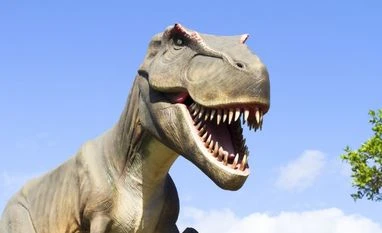 "World's most diverse set of dinosaur tracks discovered in Australia")


 Connect with us on WhatsApp